
 By Vicky Verma | Source
This doctor believes that death is not the annihilation of the human mind. He says of consciousness: ‘That entity continues, and it persists even when the brain does not appear to be functioning.’ He also suggests that ‘consciousness may be a separate entity from the brain.’
Sam Parnia, an associate professor of medicine at NYU Langone, is a leading researcher in resuscitation science and consciousness studies. He is the author of Lucid Dying: The New Science Revolutionizing How We Understand Life and Death.
His research explores near-death experiences, the continuation of consciousness after clinical death, and advanced techniques to revive the brain. By leveraging AI and cutting-edge medical technologies, Parnia is reshaping our understanding of life, death, and the possibilities of bringing patients back even after they’ve been declared dead.
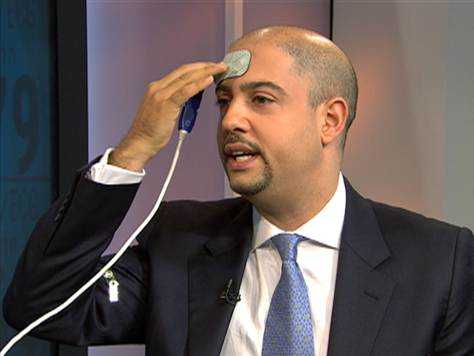
Dr. Parnia’s research reveals that death is not an instantaneous event, but rather a process that unfolds over time. After a person’s heart stops, the cells in their body, including the brain, begin their own gradual death process.
Brain cells do not die as quickly as people once thought when they don’t get oxygen. Instead of dying within minutes, they can survive for hours or even days before the damage becomes permanent. This means there may be more time to help someone who has lost oxygen, such as in drowning or a stroke.
What happens when you die?
Dr. Parnia’s research focuses on near-death experiences. He studies people who were brought back to life after their hearts stopped. Many of these patients say they had clear and detailed experiences, even when their brains were not working properly or had stopped working completely. This is surprising because scientists expect the brain to stop producing thoughts and memories when it has no activity.
One in five people who survive cardiopulmonary resuscitation (CPR) after cardiac arrest may describe lucid experiences of death that occurred while they were seemingly unconscious and on the brink of death, a new study shows.
Led by researchers at NYU Grossman School of Medicine and elsewhere, the study involved 567 men and women whose hearts stopped beating while hospitalized and who received CPR between May 2017 and March 2020 in the United States and United Kingdom. Despite immediate treatment, fewer than 10 percent recovered sufficiently to be discharged from the hospital.
Survivors reported having unique lucid experiences, including a perception of separation from the body, observing events without pain or distress, and a meaningful evaluation of life, including of their actions, intentions, and thoughts toward others. The researchers found these experiences of death to be different from hallucinations, delusions, illusions, dreams, or CPR-induced consciousness. (Source)
Dr. Sam Parnia is challenging the traditional view that death is a clear-cut, binary event. He argues that the common belief in a strict boundary between life and death is more of a social convention than a biological reality.
His research in resuscitation science is reshaping our understanding of death, showing that the process is more fluid than we assume. As an intensive care doctor, he focuses on reviving the heart and preserving brain function after clinical death, potentially allowing people to return to life with full cognitive abilities.
This raises profound questions about whether we are declaring death too soon and what truly happens to consciousness in the moments between life and death.
Many people think questions about what happens to consciousness after death belong to philosophy or religion, not science. Dr. Sam Parnia disagrees—he believes studying consciousness after death is a scientific question. As a doctor, he deals with life and death every day and works to bring people back to life after they’ve been declared dead.
He says that science has now moved beyond just studying life and has started exploring what happens after death. His research, including a large study on people who have had near-death experiences, uses advanced technology, including AI, to understand what happens to the brain and consciousness when someone dies. In short, science is beginning to uncover things about death that were once thought to be purely philosophical or religious questions.
Daniel Dennett, a philosopher who believed that human consciousness was just an illusion created by the brain. However, new research suggests that consciousness might not be as closely tied to the brain as people once thought.
Because of this, even some atheists are starting to consider the possibility of life after death. The topic of near-death experiences, which used to be dismissed as unscientific, is now being taken more seriously by researchers.
Here watch J.L. Schellenberg, a Canadian philosopher known both for his atheism but he does not dismiss the Life after death.
In 2011, a scientist named Sean Carroll wrote a blog for Scientific American. He said that the laws of physics show that life after death is not possible. He explained that our brains store information, like memories and thoughts, but when we die, our bodies break down into tiny pieces (atoms). According to science, there is no way for that information to survive after death. (Source)
A study published on Dr. Parnia’s studies in 2022 says, “So far, the researchers say, evidence suggests that neither physiological nor cognitive processes end with death and that although systematic studies have not been able to absolutely prove the reality or meaning of patients’ experiences and claims of awareness in relation to death, it has been impossible to disclaim them either.” (Source)
Dr. Parnia explains that consciousness is a deep mystery. He points out that all our decisions and actions come from our consciousness, but doctors can temporarily shut it down using anesthesia.
In a study with pigs, scientists used drugs to stop brain activity while keeping the brain physically healthy. If they hadn’t used those drugs, the pigs might have woken up fully aware, which raised ethical concerns.
Dr. Parnia believes this research could apply to humans. He suggests that, with the right medical techniques, people who have been dead for hours might be revived without brain damage. This could change how we treat sudden deaths from accidents or heart attacks.
He also questions where consciousness comes from. Many scientists assume it is created by the brain, but there is no proof of how brain cells produce thoughts. Some researchers, including Nobel Prize winners, believe consciousness might exist separately from the brain, like the internet exists apart from a computer.
Harvard neuroscientist Dr. Eben Alexander argues that there are no scientific or neurological explanations for his experience of the “afterlife.” He said that science shows that the brain does not create consciousness & that there is reason to believe our consciousness continues after death. He reveals what happened when he ‘Died.’
In 2008, Dr. Alexander fell into a coma due to a severe bacterial infection. Doctors thought he would either not survive or need lifelong care if he did recover. However, he fully recovered and shared an incredible near-death experience (NDE) that he had while his brain was completely inactive.
Before this experience, Dr. Alexander had dismissed similar stories from patients, thinking they were just hallucinations without scientific proof. After his own NDE, he changed his views and now believes that consciousness exists beyond the brain. He argues that science doesn’t explain consciousness fully and that our consciousness might continue after death. He even criticizes scientists who ignore this possibility.
Dr. Alexander now explores the idea that consciousness may not come from the brain, but instead, the brain might be like a filter for a spiritual reality. He challenges the idea of materialism (the belief that only the physical world exists) and suggests that our consciousness and free will are real, not just the result of brain activity. He believes that the soul or spirit is the true essence of who we are, and that after death, we are freed from the brain to experience an afterlife, which may also include reincarnation.
According to Dr. Parnia, “What we believe about death is fundamentally wrong”. It is not the end, he says, but a “reversible state”.
Whether people can be brought back to life after their hearts stop. It explains that cryonics (freezing people to revive them later) has not yet been proven to work, and Dr. Parnia, calls it “wishful thinking.” However, he agrees that cooling the body can protect it.
He gives an example of a British woman (Audrey Mash) who got hypothermia while hiking in Spain in 2019. Her heart stopped for six hours, which is much longer than what is usually considered death. But doctors at a hospital with a special machine (ECMO) that keeps the heart and lungs working were able to bring her back to life. Parnia says that if she had been taken to a different hospital without that machine, she would have been declared dead. Another case involved a woman who was revived after seven hours in the cold. (Source)