
 Greetings! From heart to heart in this moment we speak, I am KejRaj!
In this writing, we are not denying the existence of Jesus; however, in the way he is portrayed is nothing new; with religious claims being false and exaggerated. We continue below.
Many of the Christian beliefs, symbols, and stories about Jesus Christ are not original, but were adapted from much older pagan religions. Christianity did in fact form within the Roman Empire; where sun worship and mythic savior figures were already common. The invention of Christianity occurred under Constantine; reusing familiar symbols and stories so the new religion would be easier for pagan populations to accept and understand.
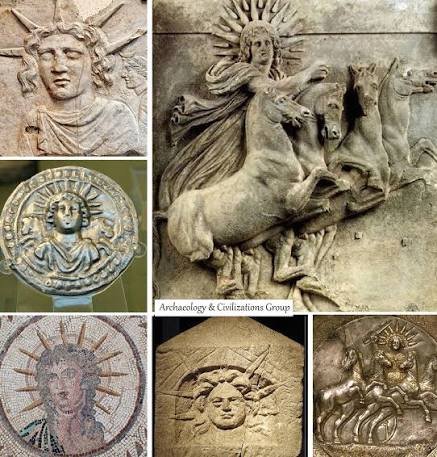
One of the strongest comparisons is with the Roman sun god Sol Invictus, meaning “the Unconquered Sun.” Allow us to point out that Sol Invictus was honored around December 25, a date later chosen for Christmas even though the Bible never gives a birth date for Jesus.
Around December 22, the sun reaches its lowest point in the sky and appears to stop moving south for about three days. On December 25, it begins to rise 1 degree north again; signaling longer days and more light. This was seen as the sun being “reborn” or “rising from the dead,” which clearly mirrors the resurrection story.
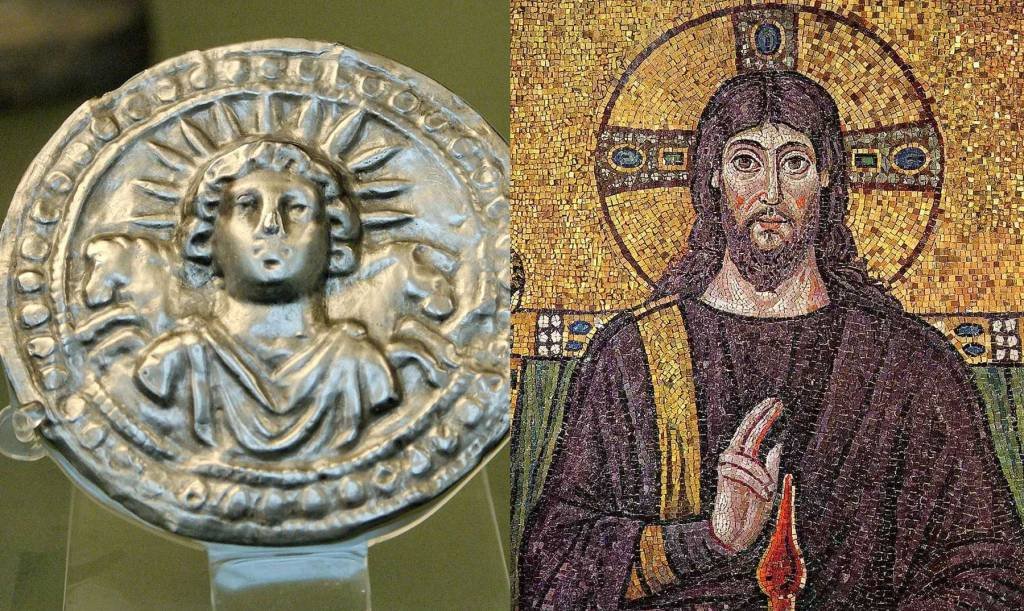
They also note similarities such as halos resembling the sun, “the crown of thorns” refers to the rays of the sun surrounding the solar deity.
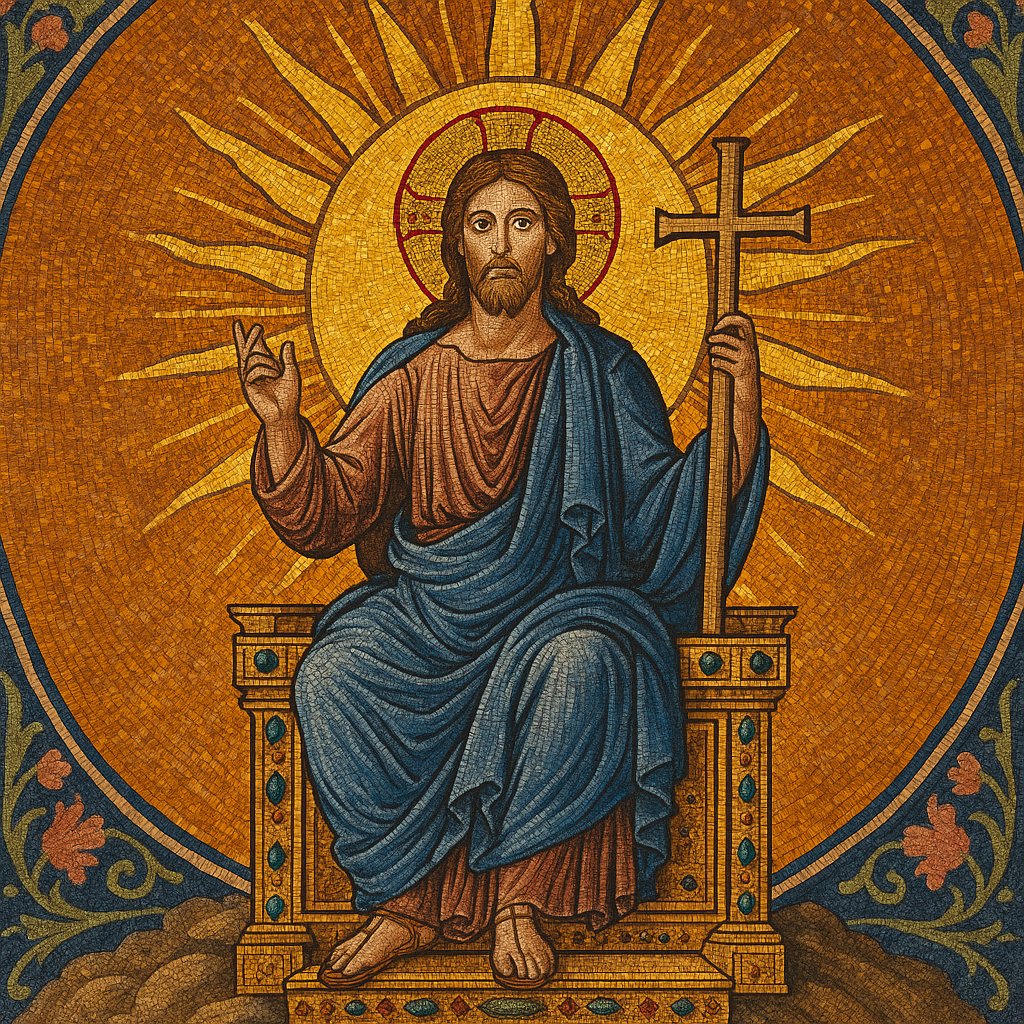
Similar claims are made about Horus, the Egyptian sun god, who was said to be born of a divine mother and associated with the sky and cosmic order. His story included themes of triumph over darkness and death, which are reflected in the story of Jesus. Other ancient figures such as Mithras and Dionysus are also cited for their links to miraculous births, sacrifice, and rebirth. The twelve disciples of Jesus symbolically represent the twelve constellations of the zodiac, with Jesus as the sun moving through each sign over the course of the year.

Seasonal celebrations also play a role in this theory. Some ancient cultures celebrated the rebirth of the sun as a kind of New Year around the winter solstice, marking the return of longer days and renewed light. Other cultures waited until spring, around what later became Easter, when daylight overtakes darkness, temperatures rise, and nature begins to bloom and crops grow again.
From this perspective, Christianity is seen as a religion that absorbed and reinterpreted older solar and seasonal traditions. While these ideas are strongly rejected by Christians, we reiterate that the overwhelming similarities are far too precise and numerous to be accidental, leaving little to no room to claim coincidence.
Yes, but so what? The idea of sun gods was only so humans could understand unconditional love. Every sun burns and burns until it can’t do anything but explode or implode. It gives life to all within a certain distance, as far as we know, to everything, because everything is made of star dust. Literally. Even things under the sea make light where the sun cannot be perceived. Light is given off in the form of photons from our very cells. LIFE is in all living. And maybe in all things we perceive as dead, FOR ALL WE KNOW, WE DON’T KNOW ENOUGH TO MAKE PRONOUNCEMENTS. ONLY STATEMENTS OF AWE AND MYSTERY.
The objective truth about Jesus, Constantine and the Church would be very shocking and disappointing if crudely given to most Christians. You could say skepticism and the excesses of rationalism and materialism in the western world were a sort of ‘counter-movement’ to that truth.
But there is a subjective truth that is ignored by most skeptics – and dare I say suppressed by modern psychologists – that while religion may be culturally-imposed, it is also an organic development of the human psyche.
Throughout the centuries, the collective human spirit has subconsciously fought the attempts to dominate it and slowly ‘fixed’ religion by it’s borders. It’s as if ‘God in us’ took the petty, flawed image that was imposed on it and turned into something beautiful, just to prove a point about inclusiveness.
What causes so much confusion today, is that the time has come for this subconscious movement to become conscious for all, and the arguments about what was devised as a domination attempt and what was ‘fixing’ it are everywhere.
But the truth is neither in art or science alone, it’s in their elusively rejected middle-ground.
Wise words.🙏❤️
It’s tough to break out of that Christian cult programming. I made it. God is within you. You don’t need a middle man.
Merci pour cette courte mais belle synthèse.
This article is interesting to me 🎄
I am grateful for the sunlight ☀️
Thank you for the new way of looking at it 🌟