
 By EraofLight
Across Europe, growing public dissatisfaction is bringing people into the streets, as citizens, workers and younger generations increasingly challenge government policies and demand political and economic change. From Albania to France, Italy and Germany, demonstrations reflect mounting frustration over corruption allegations, the rising cost of living, declining public services, economic insecurity and concerns about the future. Although each country’s protests have distinct causes and demands, a common theme is emerging: people are increasingly unwilling to remain silent about decisions they believe are affecting their livelihoods, freedoms and future generations. The demonstrations highlight a widening disconnect between political leadership and sections of the public, raising important questions about accountability, representation and the direction in which Europe is heading.
Albania; Protests Against Government Corruption and Political Leadership
Albania is experiencing one of its most significant waves of anti-government demonstrations in recent years. Student-led protests that began in Tirana have spread to other cities, with demonstrators demanding the resignation of Prime Minister Edi Rama. The movement is driven by several grievances, including allegations of government corruption, rising education costs, unemployment, inadequate university conditions and diminishing economic opportunities for young people. Protesters have also expressed frustration with what they see as a lack of accountability among senior government officials. The demonstrations follow months of public opposition to controversial development projects along Albania’s southern coastline.

Tensions have escalated, with some demonstrations resulting in clashes between protesters and police, property damage and arrests. Police have responded with tear gas, water cannons and other crowd-control measures. While the majority of the movement’s grievances concern political accountability and economic conditions, disagreements remain over protest tactics and the extent of police force used. On October 25, Rama announced new measures intended to discourage violent demonstrations, including substantial fines for participation in protests that turn violent. However, the measures have not resolved the underlying political tensions. The demonstrations represent a growing challenge to a government that has been in power since 2013.
France; A Growing Movement Over Living Costs, Education and Public Services
France is experiencing a major wave of demonstrations, with hundreds of thousands of people taking to the streets for a third consecutive weekend. What began largely as a youth-led movement over deteriorating school conditions, teacher shortages and university admissions has expanded into broader protests over the cost of living, purchasing power, public services and economic inequality. Trade unions, students and other groups have joined the demonstrations, expressing frustration with government policies and demanding greater investment in education and social services. According to figures reported by the Associated Press on October 31, the French government estimated that approximately 320,000 people participated in the latest nationwide demonstrations, following an estimated 410,000 the previous weekend.
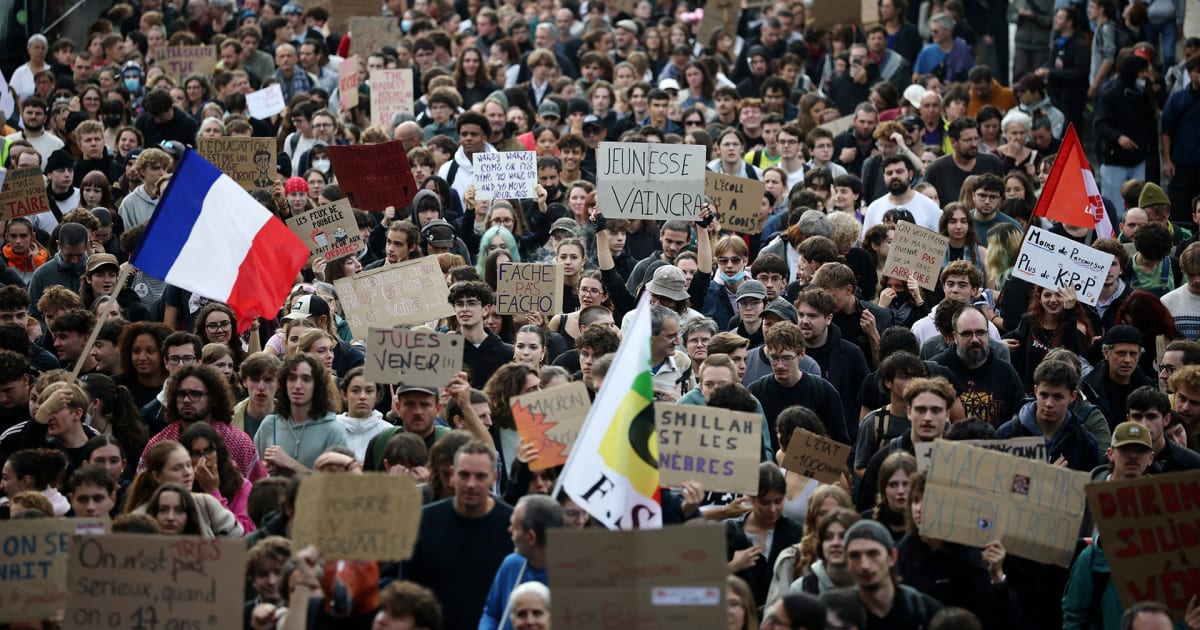
The demonstrations have also exposed growing tensions between citizens and the authorities over freedom of assembly and the handling of public unrest. Although many marches have remained peaceful, earlier protests included looting, vandalism and violent confrontations between demonstrators and police. Authorities have deployed approximately 70,000 police and gendarmes nationwide, introduced restrictions in certain areas and imposed additional security measures. Protesters and civil liberties advocates have questioned some of these restrictions, arguing that the right to demonstrate must be protected. With further demonstrations scheduled and trade unions preparing additional mobilizations, France faces a prolonged period of social and political pressure.
Italy; Workers and Students Mobilize Against Economic and Government Policies
Italy has witnessed widespread demonstrations as students, workers and trade unions mobilize over economic pressures and government policies. On October 30, a nationwide general strike organized by the grassroots USB trade union brought thousands of people into the streets across more than 40 cities. Among the principal demands were higher wages, stronger public services, relief from the rising cost of living, increased investment in education and opposition to growing military expenditure. Demonstrators have also raised concerns about the country’s economic direction and the allocation of public resources, arguing that the needs of ordinary citizens should receive greater priority. The protests form part of a wider European movement involving workers and younger generations dissatisfied with their economic prospects.

Demonstrations took place in Rome, Milan, Turin, Naples, Genoa and numerous other cities. While most of the October 30 protests were reported as peaceful, tensions emerged in certain locations, including Turin, where police used water cannons after demonstrators approached security barriers. In Rome, protesters gathered near the Colosseum, while in Genoa, port workers and students joined demonstrations opposing the use of ports for arms shipments and highlighting the human consequences of international conflicts. The latest mobilizations follow earlier incidents of rioting, looting and confrontations with police in several Italian cities. The scale of participation reflects a growing debate over economic priorities, social spending, employment conditions and the government’s direction under Prime Minister Giorgia Meloni.
Germany; A New Generation Takes to the Streets
Germany has joined the growing wave of youth-led demonstrations spreading across Europe. On October 31, protesters gathered in cities including Berlin, Frankfurt and Munich under the campaign known as Gen Z regelt, which translates roughly to Gen Z takes charge. The movement is calling for better educational facilities, greater investment in public services, lower living costs and improved prospects for younger generations. Organizers have also voiced opposition to compulsory military service and government spending priorities they believe place additional burdens on young people. Demonstrations were planned in approximately 34 cities, with organizers initially anticipating more than 160,000 participants nationwide.

The demonstrations reflect broader concerns about Germany’s economic challenges, deteriorating educational infrastructure, public spending cuts and the future opportunities available to younger generations. However, the movement’s organization and political composition have also attracted scrutiny. Germany’s national school student organization has distanced itself from the campaign’s organizers while acknowledging that students have legitimate concerns about their circumstances. Authorities have increased security in several cities, partly because of the violence witnessed during demonstrations elsewhere in Europe. Early reports from police in Frankfurt, Munich and Berlin indicated approximately 6,000 participants across those three cities, considerably below organizers’ expectations. Nevertheless, the emergence of this movement adds Germany to a growing list of European countries experiencing renewed youth activism and public dissatisfaction.