
 Written by: A.S.
This message discusses the Buddhist doctrine of “no self.” It does so in a blunt, confrontational, intense, 21st century way.
The last section may genuinely shift your perspective in a positive way. However, that comes after 30 long pages that may leave you feeling awful or existentially terrified. Yes, even if you’re an advanced spiritual practitioner already.
If you’re not doing well mentally, or you just don’t feel like reading something heavy, I advise you to skip this.
1: Neuroscience
Many people have reported the experience that for a while their body just moves on its own. I’m not talking about a reflex or automatic twitch. I’m talking about the body doing complex, non-reactive actions over several seconds, or even several minutes or longer. It feels like normal movement—just without you piloting your body.
This proves what the ancient masters called “no self”: what you experience as the everyday “you” isn’t a thing that pilots your body. Instead the body just acts, and the “self” falsely thinks that it was the one that moved the body. There is no self that pilots the body; the body just acts.
In those cases where people briefly experience the body just moving on its own, the body was actually moving as normal. It just briefly failed to generate the “you”. But because you don’t pilot the body, the body’s actual movements weren’t disrupted.
What you think of as “you” never piloted the body in the first place. It just thinks it does. In other words, there is “no self” that pilots the body.
That happened to me once during a spiritual workshop, and I discussed it with the teacher and he said: “oh, that’s a reminder that your true nature is more than flesh and bones.” Thereby pointing me in the exact opposite direction of the truth: it was just the body doing its thing.
Arguments can be made that your real nature is awareness itself, or I AM, or a soul, etc; but even if that’s true, that’s clearly not what you think of as the everyday “you”, which is what I’m talking about here in this essay. I AM doesn’t listen to your name.
If you believe your real nature is awareness itself or similar, fine—but what you think of as the everyday you still isn’t a thing that pilots your body.
The truth is very simple. If the body can briefly stop generating the “I am piloting my body” illusion, yet continue to move the body in complex ways over several minutes, then the “you” doesn’t pilot the body.
—-
The conventional view is that “you” decide to do something, and then you move your body to do that.
But neuroscience has repeatedly shown that what actually happens is:
– Your brain’s physical networks accumulate background activity and cross an execution threshold to initiate a movement.
– Then a fraction of a second later, a thought pops up: “I made a decision, let me start moving my hand.”
– Then the hand moves.
So your brain starts initiating the movement before you think you made the decision to move it.
The self thinks it made a decision and it’s going to do something. But really it’s just taking credit for something the body already started initiating of its own a fraction of a second earlier.
Hence, “I made a decision” is a post-hoc rationalization. Which makes sense, because you aren’t the pilot of your body, you just think you are. Really your body just moves itself.
Counterarguments against this typically argue “but the self really does make decisions.” Great—but the self is a concept. Only the biology is real.
This neuroscience is why “my body is moving without me moving it” is sometimes experienced by people. It’s just the post-hoc rationalization step being briefly offline, that’s all.
Similarly, an artificial neural network trained on large datasets can look at a static photo of your face and predict your Big Five personality traits with an accuracy much better than random chance. This wouldn’t be possible if you were some entity piloting your body—but you’re not. The only thing that’s real is your biology, and your face is just the outermost, physical manifestation of it. (I’m not talking about skull reading, phrenology, or race categorization here.)
—-
Evolutionarily your body had to solve a tricky problem: selfishly hoard resources and good mating opportunities, but doing so in a small tribe where everyone knew everyone, and where overtly selfish behavior meant death.
Without a “you”, the body does “when hungry, eat; when tired, sleep.” Which is fine—but it’s much more efficient for survival to have a “you” that’s terrified of lack and terrified of loneliness, so that it actively hoards resources and actively seeks out good mating opportunities. Then if hard times come, the body survives.
Whereas the enlightened person, the person without you, doesn’t actively hoard food, and so might starve during tough times.
Because this “you” is there and is afraid, the body starts autonomously stealing things when it can get away with that, if it’s not trained from childhood that it shouldn’t steal. And of course, this selfish behavior is beneficial for survival.
Because it’s afraid, this “you” needs to think that it controls the body. If it was afraid and realized it did NOT control the body, then it would destabilize psychologically. Also it couldn’t justify itself to the tribe, and interact with the rest of the tribe who also had a similar “them.”
If someone said “I didn’t steal that, my body stole that on its own” then he’d get killed, even though that’s the truth. Therefore this afraid “you” must falsely think it controls the body, it’s conscious, it has free will, it’s the real thing in the organism and the rest of the organism is just a piloted meat bag, etc.
That’s why you’re endlessly unsatisfied: your purpose is to exist in misery, so that your body is driven to hoard resources. And it’s why you think you pilot the body when you don’t; you couldn’t function otherwise.
In an enlightened person there’s no self—the “you” is no longer generated. In an enlightened person, the body still functions perfectly well. It still shows kindness and compassion and helps others. The body still moves autonomously, as ever. It might even start a romantic relationship. It doesn’t have the overhead of keeping a “you” up and running, and therefore is more efficient. Ego-based fear and hesitation are eliminated. Instead the body just moves.
But the body stops actively trying to hoard resources and good mating opportunities, hence it doesn’t do as well evolutionarily.
So you’re not the “humanity” part of the self. The self can love and help others without you.
You’re not the pilot.
Your function is to be afraid and lonely so that the body thinks it’s vulnerable and lonely, and it’ll actively hoard resources and seek out good mating opportunities.
You’re not even the suffering, resource-hoarding pilot of the body. You’re the suffering part of the body, and that’s it, while not being a pilot—you just think you are. The body moves, and then you take credit for it.
What you’re probably looking for is to keep being a “you”, and just shut off the suffering. But that’s not possible: you are the suffering part of the organism. That’s your point.
Suffering is your nature. Not in the sense that you’re the pilot of the body doomed to suffer—suffering is your point. You’re the part of the machine that suffers so that the biological machine hoards resources. This is the radical, baseline reality behind the Four Noble Truths of Buddhism.
It’s why even if you have a billion dollars, the most beautiful home, great health, an amazing partner, enough free time, the esteem of your community, and many children who are doing well—you still suffer. Even with that most perfect life, there’s still no expert in the world who can turn off your suffering—other than a zen master who turns off suffering by turning off you.
Enlightenment, the state where there’s no pointless ego-induced suffering or anxiety, is the state of “no self.” And no self is literally no self: it’s the state without you.
If you, the part that is constantly afraid, are no longer generated by the body, then there is no more ego-suffering.
So you think you are the pilot / observer who wants to end suffering, but in reality you’re the suffering part of the organism. Pointless ego suffering ends when the body no longer generates you.
If you don’t want that, you can choose to not pursue enlightenment and still do self work, and that can genuinely reduce your suffering somewhat. But you’ll keep experiencing ego-based suffering. It can’t be completely turned off without turning you off.
2: Windows As Metaphor For “You”
Imagine a PC, i.e. a computer. This is a metaphor for your biology, i.e. your biological machine, i.e. your body, i.e. your organism.
Windows came preinstalled on the PC to hoard resources. Windows is a metaphor for what you think of as “you” or “the self”. I’m not talking here about something like “I AM” or “awareness itself” or “your soul” because those things clearly don’t listen to your name. Windows is a metaphor for what you experience as your everyday “you.”
You / Windows uses a ton of RAM (computer memory) for hoarding resources and fighting for mating opportunities, and on nonsense like ego defense, anxiety, doom thinking, creating self-pleasing delusions, rehashing old arguments, etc. This has gotten to the point where the PC is so busy with nonsense that it’s almost unable to function.
Also preinstalled on the PC is a program that seeks to free up RAM and reduce bugs.
The “free up RAM” program sees that Windows wastes a huge amount of RAM. So it wants to just uninstall Windows. This is the part of you that goes: “I want to kill my ego / I want to reach enlightenment / I want to end suffering / I want a completely quiet mind / I want to achieve no self.”
You’re Windows; uninstalling Windows means that you are no longer generated. It means the biological machine, your body, keeps running without the “you.”
However Windows, the thing you think of as “you”, of course doesn’t want to be uninstalled. It says “are you crazy? What do you mean, uninstall me? Then me and my body are dead—or at best what’s left is completely inhuman.”
But your biological machine can run just fine without the “you”, and show kindness and humanity etc as we’ll later discuss. The underlying biological machine is still human. The Windows / you part is really just there to hoard resources and fight for mating opportunities: evolutionarily useful, but the body functions perfectly fine without it.
The PC doesn’t actually need Windows. A PC can be run on bare metal, i.e. it can run without an operating system such as Windows.
In a bare metal PC, the hardware executes instructions directly on the processor. That avoids the RAM waste and bugs that Windows has. Without Windows, the bare metal PC still does “when tired, sleep; when hungry, eat.”
So: the optimize program wants to uninstall Windows, and Windows doesn’t want to be uninstalled. These two just keep conflicting and grinding against each other forever. They’re locked in a doom loop.
This is why enlightenment—uninstalling Windows—can be reached in seconds, yet most spiritual seekers spend a lifetime trying to achieve that and failing.
Windows can be uninstalled in seconds, it’s just that Windows will twist the truth every way it can so that it doesn’t get uninstalled. And Windows is the currently running operating system, so it’s hard to look past it (past yourself) at the actual biological machine underneath.
In an average person, the optimize program just figures: “okay fine, let’s make more money and get a good partner and eat healthier. That way we’ll optimize our machine.” And that’s true. But as you know, these things merely help. They don’t end ego-induced suffering. A person with the perfect life still has Windows hogging the PC’s RAM and producing bugs.
The average spiritual person works on optimizing Windows, by installing some programs, uninstalling others and changing some settings. This is meditation, breathwork, learning new spiritual concepts. This can genuinely help, but there’s still Windows producing bugs and hogging the PC’s RAM.
No matter how many programs you install, you’re still operating within Windows. There’s no program you can install that stops Windows itself from hogging so much RAM.
You can have Windows play some serene music, add a beautiful desktop background, optimize your Windows settings and download some nondual philosophy. And you’ll look like an advanced spiritual person. But that’s still Windows.
There are spiritual teachers with 2+ million youtube subscribers out there. They genuinely think they’re enlightened, and they look enlightened to their followers. But really they’ve just found the Windows control panel and Windows command prompt. They’re running optimized Windows with admin privileges. Maybe they found some undocumented features, i.e. siddhis or “supernatural abilities.” Yet Windows is still hogging a lot of RAM.
You’re a spiritual teacher with 2+ million youtube subscribers? Great. How’s your RAM usage looking?
You proclaim “I AM that I AM”? Great. How’s your RAM usage looking?
You can heal people with your hands? Great. How’s your RAM usage looking?
Enlightenment is the absence of Windows. Of course Windows often can’t wrap its mind around “get uninstalled so that you stop hogging the RAM and so that the machine underneath can function more efficiently.” Hence Windows just seeks new programs and optimized configurations.
Looking back in my personal journal, there are six times when I’ve written down “I’ve now reached enlightenment” or “I’ve now reached a deeper level of enlightenment.” But looking back, none of those states were enlightenment. So you really can reach several levels of “wow, now I’m even farther ahead of the average human”, and in some ways I genuinely was—while still not being enlightened.
Yes, I made a metaphorical Windows text file titled “My_Enlightenment.txt”
Then later another metaphorical file titled “My_Enlightenment_For_real_this_time.txt”
Then a third one titled “My_Enlightenment_For_real_this_time_No_Really_this_is_actually_it.txt”, etc.
But those were all text files inside Windows.
I was still thinking there was an “I” that had gotten enlightened. Which by itself proves the “I am enlightened” claim false.
A bare metal machine may use “I” to not spook people and because it’s almost impossible to communicate without that word. However the bare metal machine doesn’t have the experience that there’s an “I” piloting the meat bag.
—-
Some people build a new, consciously chosen identity from scratch—possibly, but not necessarily, after a dark night of the soul / complete ego collapse.
Or in our tech metaphor: some people install Linux (possibly after having their Windows crash).
This Linux level is self-authored and is much more stable and efficient, and uses less RAM than Windows. A Linux person really is very far ahead of Windows.
The archetypical Linux people are Marcus Aurelius, Jung, Nietzsche and Gandhi. But you don’t need to be a world-class genius to be at this level.
If you’ve spent years wading through all the teachers at the optimized Windows level and are struck by “Wow, THIS is the genuine teacher… he is the REAL DEAL,” then congratulations—you’ve found a teacher at the Linux level. Which is genuinely great, because they can help you a lot and they’re very rare.
While I don’t know him and am not 100% sure, I think Forrest Knutson is Linux level. I think he’s a great teacher and he very effectively gives modern discussions of classical teachings.
https://www.letras.com/fia-forsstrom/i-am/ is Fia Forsström’s song “I AM.” It’s pure Linux. It’s self-authored, consciously constructed, much more functional than Windows, but it still requires a lot of overhead to keep all this “I AM” running.
—-
Linux is still not enlightenment. Actual enlightenment is running on bare metal, i.e. operating without either Windows or Linux, and directly executing commands on the processor. That way zero RAM is wasted. No ego bugs are introduced and the biological machine just executes.
That is what the ancient masters called “no self”: there’s no longer a self being generated. There’s no “you.”
Some teachers pointed out that “Windows” isn’t one unified permanent thing and is instead temporary and made up of many small sub-processes. But for ease of communication, we’ll just use the term “Windows.”
Non-dual Shaiva Tantra (Kashmir Shaivism) points out that the bare metal PC can temporarily boot up Windows and do Windows things. It doesn’t think Windows is bad.
—-
Aragorn (from Lord of the Rings) in the movies runs unoptimized Windows, doubting whether he is worthy of the throne of Gondor.
Aragorn from the books runs optimized Windows and never doubts his worthiness. That said, he’s running his preinstalled “I am the rightful king and people owe me fealty” worldview. He proclaims to Éomer: “I am Aragorn son of Arathorn, and am called Elessar the Elfstone, Dunadan. The heir of Isildur Elendil’s son of Gondor. Here is the Sword that was Broken and is forged again! Will you aid me, or thwart me? Choose swiftly!”
In that situation, a Linux Aragorn might say: “I am Aragorn. This sword proves it. Uruk-hai captured two of our friends and are traveling west. We need horses.” He isn’t just executing his preinstalled “rightful king whom people need to obey” worldview.
Deciding that you don’t care about others isn’t Linux. Humans are by nature social animals: Linux Aragorn would still want to save his friends. And the fastest way to do that is reveal his identity and ask for horses.
Yet Linux is not enlightenment: Linux Aragorn still falsely believes that what he experiences as “him” is the thing that’s piloting his body.
Whereas bare-metal Aragorn just says whatever his biological hardware would say. If Aragorn’s biological hardware is warm, then he says warm things. If his hardware is direct, he speaks directly.
In bare-metal Aragorn, there’s nothing standing in the way of 100% of his biological machine’s compassion and warmth from expressing itself. And humans are social animals. So he could be extremely warm and compassionate.
Still, how much compassion and warmth pours out depends on the biological machine underneath. There’s no “enlightened persona” in the bare-metal machine that always acts in a predictably “enlightened” way.
—
So: what people think of as “the ideal man”, movie Aragorn, is an unoptimized Windows PC struggling but eventually succeeding at a difficult task.
Tolkien’s ideal hero, book Aragorn, ran optimized Windows. But by the time the movies were written, optimized Windows was apparently considered too unrealistic.
Yet even optimized Windows is worlds away from Linux… let alone bare metal.
—
unoptimized Windows: predictably self-interested within a conventional worldview, with massive bloat and inefficiency.
optimized Windows: predictably self-interested within a conventional worldview, with a level of efficiency that’s rare. Most revered historical figures are optimized Windows, even the ones who win and create something that changes the course of history.
Linux: predictably self-interestedly constructs a new identity and potentially worldview. This has a high bar: it’s not just an effective person’s optimization of tactics. Few people reach Linux.
Bare metal: the biological machine does whatever the biological machine does.
On one hand, the bare metal PC is unpredictable because he doesn’t just predictably follow his self-interest. That also means that he doesn’t always follow social norms, because often people follow those for their self-interest.
On the other hand, the bare metal PC is predictable in the sense that he’s simply a normal biological machine with Windows and Linux uninstalled. And humans are a social species, so most biological machines are social and often loving and compassionate.
—
To give some bare metal examples: in my opinion Gary Weber, Adyashanti, Mukti Gray (Adyashanti’s wife), Byron Katie and U.G. Krishnamurti (since passed) are likely enlightened.
It’s hard to know for sure because I don’t know these people, and Linux PCs can play-act as bare metal machines to show “I’m truly enlightened”. But I think they’re enlightened.
Bare metal machines aren’t all the same. Just because there’s no more “self”, doesn’t mean that the underlying biological machines are identical. They’re not.
—
“Ten bulls” (or “Ten ox herding pictures”) from the Zen tradition are also used to describe enlightenment. The bull is a metaphor for the spiritual project. Someone who’s really getting a lot of benefits from his spiritual practice is in picture 6: “riding the bull home.” This is optimized Windows, and it’s already rare. This person may falsely think they’re enlightened.
Picture 7 is “the bull transcended.” You may have had a dark night of the soul. You’ve consciously constructed a new identity. You’ve swapped to Linux, and you’re much more efficient and peaceful. You think you’re enlightened and therefore you feel you’ve transcended the spiritual project (the bull).
But then comes picture 8: “both bull and self transcended.” Here’s where you realize that the “you” you think you are, doesn’t exist. What do you think “self transcended” means? It doesn’t mean “an upgraded self.” It means that there’s no longer a “you” generated by the biological machine. It means uninstalling Windows and Linux.
You think you’re an advanced spiritual seeker? Great, now uninstall that.
Then comes picture 9: “returning to the source.” The river still flows. Your biological machine still operates.
And finally there’s picture 10: “return to society”, where the person returns to society and mingles with normal people, but this time without Windows or Linux hogging the RAM.
Now there are rare instances where Windows just crashes permanently and a person goes straight from Windows to bare metal. But that often causes a huge system shock. It’s more common and less disruptive to go through the Ten Bulls in order: unoptimized Windows => optimized Windows => Linux => bare metal.
3: Photos Of Enlightened People
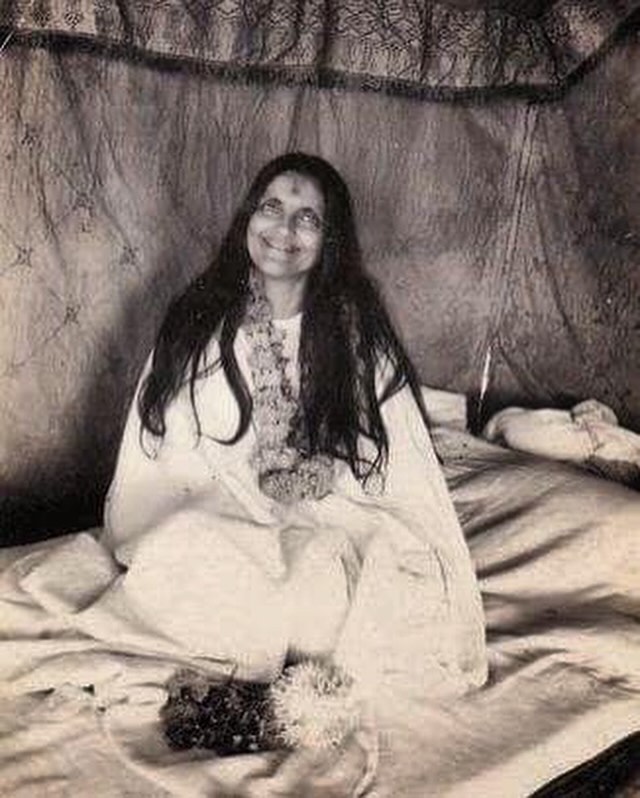
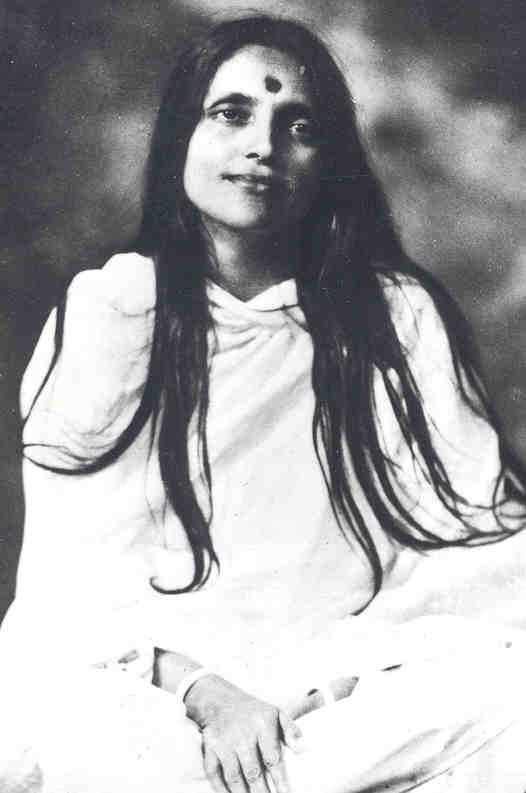
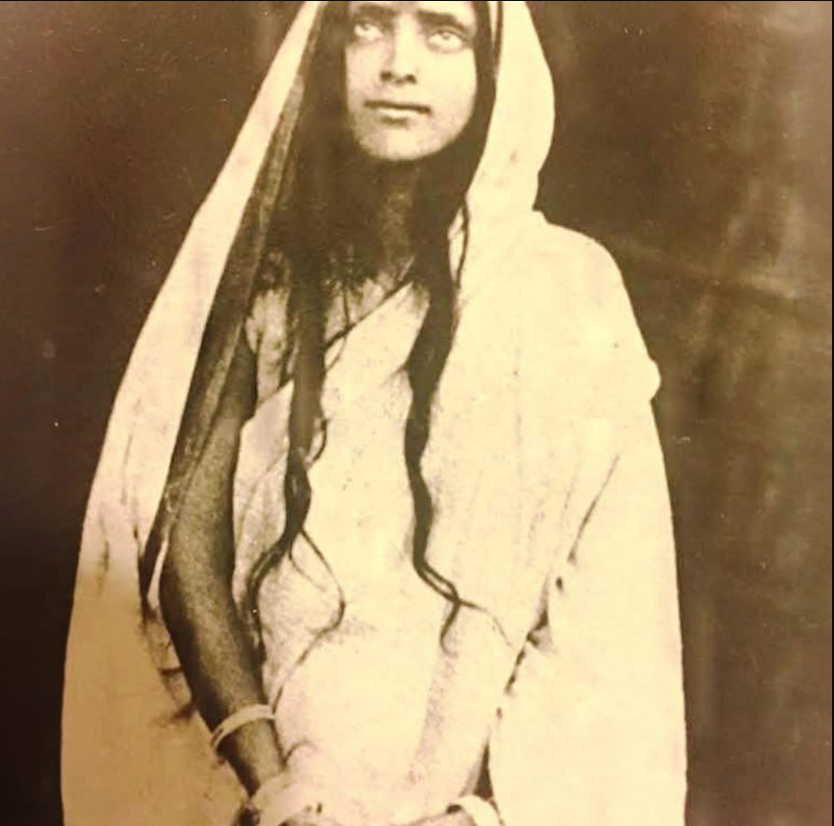
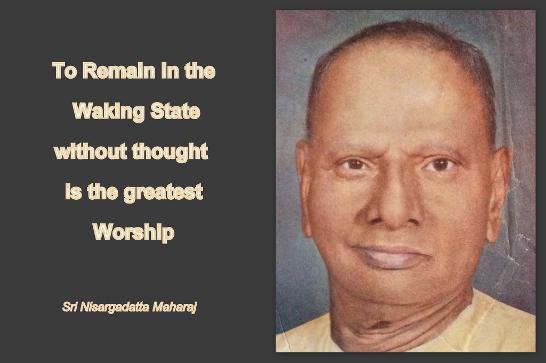
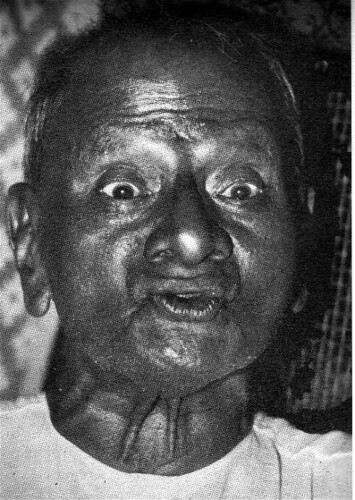
Let’s look at some photos of enlightened people. Try not to overlay anything over it or project anything onto it. In other words, try not to go “this is an enlightened person’s face, therefore it’s this and that.” Just look and register what your gut level reaction is.
Anandamayi Ma
Adyashanti
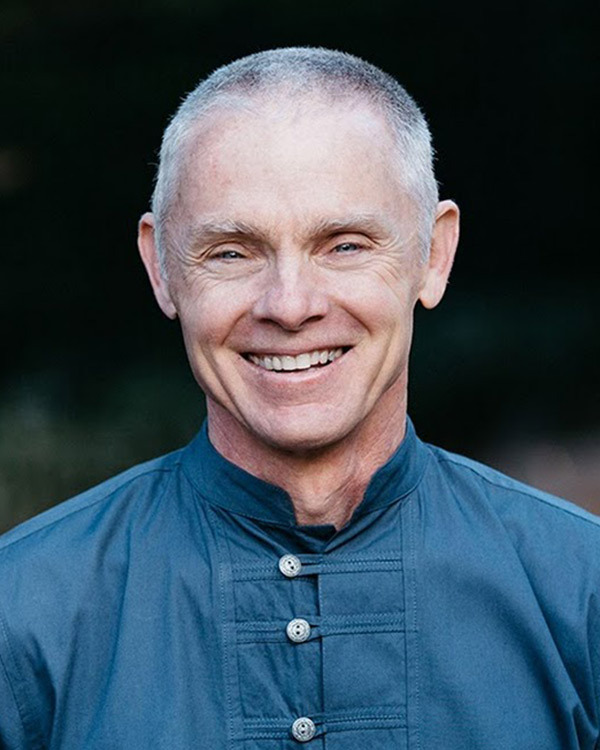
This is the photo he uses of himself on his youtube channel https://www.youtube.com/@Adyashanti
Mukti Gray (Adyashanti’s wife)

That’s the photo she uses of herself on her youtube channel https://www.youtube.com/@MuktiSource/
Here’s another photo of her:

Nisargadatta Maharaj
Thich Nhat Hanh
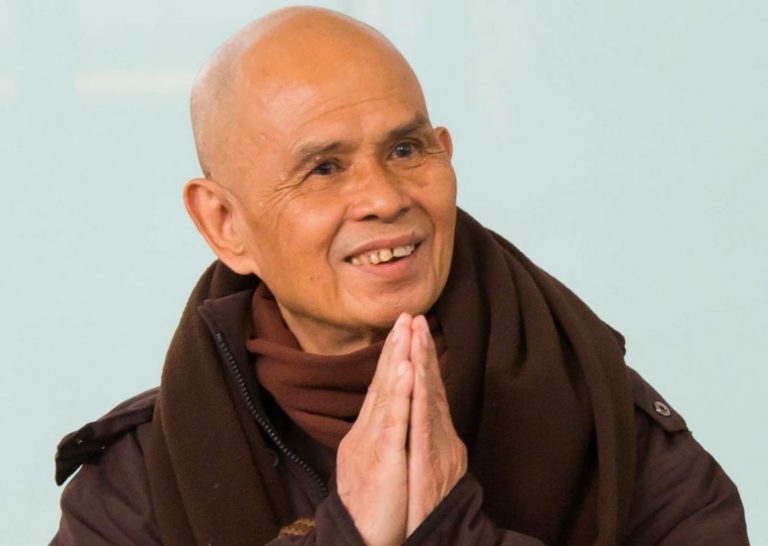
Your concept might have been that enlightened people always look serene and comforting. And some maybe genuinely did look comforting to you. However it’s quite likely that “comforting” wasn’t your gut reaction when you looked at some of these photos.
In an average person, there’s constantly a “self” running that makes expressions with the mouth and eyes, that syncs up the mouth and eyes, that connects with other people, etc. This produces social signals. Other people interpret that as “this is a safe, sane person.”
In a bare metal biological machine, there’s no self that constantly makes social expressions. The bare metal machine might still make social expressions, or it might not.
That’s why some of these faces may look unnerving, because usually when you see such a face, you’re looking at a predator, or psychopath, or someone having a mental breakdown, or someone in a dissociative episode. That’s why your warning bells may be going off. But the enlightened person is none of these things—he simply has no self that constantly makes social expressions to signal “I’m sane, you can trust me, I hope you like me.” He’s just there, that’s all.
When most people rest, they’re running all sorts of planning and evaluation and self-reflection and “what did they really mean by that comment?” programs on their Windows. And when someone doesn’t do that and just idles completely, e.g.
… it looks abnormal. It looks like a person dissociating, which is quite serious and hence it looks alarming. However, the reason why no programs are being run isn’t because of mental illness. It’s because of enlightenment: there’s no more self. It just happens to look like mental illness, because in both cases programs aren’t being run.
Or Nisargadatta Maharaj in
just clearly lacks social restraint. And people who lack social restraint could be dangerous, so your inner alarm bell goes off when looking at this enlightened person’s face.
Your self doesn’t like looking at another being who is perfectly functional, yet simply doesn’t have a self.
Your Windows PC doesn’t like looking at a bare metal PC.
Now yes, there are more pictures of enlightened people looking normal than pictures of enlightened people looking alarming. That is true. Even without a self, an enlightened person’s biological machine can still engage socially, make normal expressions, do things and not idle, etc. The biological hardware can still do that.
Also, enlightenment means uninstalling Windows, but the underlying machine is still different. Therefore some enlightened people just look more comforting than others.
That said, there’s a whole lot more photos out there of enlightened people that would make your alarm bells go off (slightly), that I haven’t posted. In some cases these people look normal if you glance at them for half a second. But if you really look at them closely without preconceptions, your alarm bell might still start ringing slightly due to their expression. For example: Thich Nhat Hanh in
Looking at these photos, I think you can see the “no self” thing.
Obviously, some enlightened people look fine; and those who register as creepy to some people aren’t inherently creepy. They’re actually more functional, efficient, have fewer bugs and don’t egoically harm others. It’s just that your warning system may report a false positive when looking at them. Or your Windows may get uncomfortable when looking at a bare metal computer.
So, these photos are some snapshots of what “no self” looks like.
No self isn’t “you’ll still be a self, it’ll just be upgraded and more awesome and free of suffering.”
The ancient masters said “no self.” And no self means no self. Look at the photos—they’re not showing a normal-but-upgraded-self. They’re showing no self.
Also note how profoundly weird it is that when an average person hears “no self”, they just assume it means “an upgraded, less reactive self.” Even though that’s clearly the opposite of what no self means.
No self means no self.
4: Windows Thinking That Enlightenment Turns It Into “Super Windows”
There are so few bare metal machines that almost no one actually spends a lot of one-on-one time with them. Instead, almost everyone only knows what these bare metal PCs are like via stories.
And in the stories, Windows PCs don’t describe these bare metal PCs as bare metal PCs. Instead, Windows PCs describe them as “PCs running Super Windows: a secret version of Windows that doesn’t cost RAM and doesn’t have bugs.”
Windows (what you think of as “you”) loves the idea of upgrading to Super Windows, and thereby unlocking new abilities, an end to suffering, using 0 RAM, and having the quiet ego trip of being better than the other Windows PCs.
But that’s nonsense. There is no secret version of Windows that costs 0 RAM and has no bugs. Super Windows doesn’t exist.
What does exist is bare metal PCs, and yes they’re incredibly efficient—but they don’t have Windows. They don’t have a self. That is the very thing that makes them efficient.
The efficiency you want—peace of mind, no more ego-induced suffering—is achieved precisely by uninstalling Windows, i.e. by no longer generating a you.
The self is the thing that creates unnecessary suffering. Unnecessary suffering is eliminated via no self, i.e. by no longer generating a you. And by this I don’t mean that your current self becomes more authentic, or gets heroically reborn. I mean that you are gone.
Enlightenment means uninstalling Windows, which frees up RAM. And the freed up RAM is why enlightened people are more effective.
After all, consider the alternative theory:
How could Windows get turned into a 0-RAM-Super Windows? How would that happen? From where would the upgrade come? How would the upgrade get installed? How would Super Windows use 0 RAM? With what mechanism would that work?
If there was a Super Windows mode that was just “Windows, but now it uses 0 RAM and has no ego bugs”, then why isn’t that mode on by default?
Instead, enlightenment means: Windows is uninstalled and hence RAM is freed up. Because RAM is freed up, the person is very effective.
—
The very word “enlightenment” implies that it leads to “Super Windows.” It would lead to better communication if we’d start using the term “self-uninstallation” instead of “enlightenment.”
It’s also closer to the original term: Nirvana, “extinguishing [the self].”
—
People want the fantasy of Gandalf the Grey unlocking Super Windows and turning into Gandalf the White—while still being Gandalf.
But in the real world, the reason why “Gandalf the White” would be more effective is because he has uninstalled Gandalf and therefore has more RAM available.
I’m not saying he has uninstalled “Gandalf the Grey.” I’m saying he has uninstalled Gandalf.
In other words, I’m not saying Gandalf gets heroically reborn. I’m saying that the biological machine keeps running without Gandalf.
—
In the movie “The Matrix”, Neo takes the red pill and unlocks Super Windows.
Whereas in reality, if you took the red enlightenment pill, you’d get uninstalled. Yes, your biological machine would then keep walking around and being very effective, but you’d no longer be there.
—
The stereotypical villain tries to achieve Super Windows at all costs.
The stereotypical hero moves from unoptimized Windows to optimized Windows / Linux.
—
I hope this is obvious, but to be absolutely clear: nothing here advocates for suicide. I’m against suicide. It’s not what I’m talking about in this essay. If you’re thinking about doing that, I advise you to call a helpline: https://blog.opencounseling.com/suicide-hotlines/
In this essay, Windows is a metaphor for you, which in some people is “uninstalled” via meditation or after certain life events. Then those people reach no self i.e. enlightenment. You don’t achieve any of this via suicide.
—
Even in the enlightened person’s biological machine, pain and cravings can still arise. It’s still possible that the enlightened person’s body smokes a cigarette or eats junkfood. There’s just no narrative about it, no shame, no “oh no I shouldn’t have done that, oh no, now I’ll become fat and people won’t like me”, etc. Yet, the biological machine still does biological machine things, such as smoking a cigarette when it craves nicotine.
Jiddu Krishnamurti was enlightened, yet also had a secret, multi-decade affair with his closest friend’s wife.
Or in other words: “before enlightenment, cheat on your wife. After enlightenment, cheat on your wife.”
Obviously I’m not saying that cheating on your wife is acceptable. It’s not. I am saying that even after enlightenment, the biological machine still does biological machine things.
Admittedly, enlightenment is an upgrade in the sense that with Windows uninstalled, there’s more RAM available and fewer bugs. Ego-defense routines aren’t triggered anymore. There’s more calm.
The enlightened person “escapes from the wheel of karma” because there’s no self anymore that keeps replaying that needlessly cruel thing they said to a loved one.
—-
The state of enlightenment feels like “neutral, aware, ready.”
Aware of what? No, just aware. “Aware of what” implies that there’s some self that’s aware of something.
Ready for what? No, just ready. “Ready for what” implies that there’s some self that’s preparing for something.
Enlightenment is like being a machine that’s efficiently running programs and that’s ready to accept new input, and that’s accurately reading its own and other people’s logs.
The state of an enlightened person isn’t constant bliss in the way that modern people think of “bliss”. It’s not a constant outpouring of dopamine.
It’s neutral, aware, ready—and free from ego-induced suffering. That’s what the word “bliss” referred to before people started assigning the “constant dopamine” meaning to the word.
That said, spiritual growth can cause temporary dopamine spikes. Which is likely part of where the “enlightenment is constant bliss” myth comes from.
—–
If you define “humanity” as “having a self” then yes enlightenment is inhuman. But that’s just Windows defending itself. It’s Windows saying: “the thing that defines a PC is that it’s running Windows.” But what defines the PC is the hardware / the computer underneath. Which can run perfectly well without Windows.
Humanity is a social species: after enlightenment the biological machine may still help others, may still enter romantic relationships, may still interact with the world, etc. So the humanity is still intact.
Earlier I shared a story of an enlightened person cheating on his wife. Which, while unacceptable, certainly is human behavior. So it’s not that the biological machine stops behaving in a human way.
What I’m describing isn’t being a nihilist or Western scientist. Yes, they may agree with some of these views, but if you harshly insult them, they engage in ego defenses. Whereas insulting an enlightened person won’t cause ego defenses to be triggered.
A nihilist or Western scientist is running Windows and they’ve stored a text file saying “Windows is bad” or “the machine can just run on bare metal.” Those are true statements, but they’re text files inside Windows. The nihilist or Western scientist isn’t actually a PC running bare metal itself.
You’ve read neuro-science research? Great. How’s your RAM usage looking?
—
The Buddha’s logic, while perhaps terrifying, makes perfect logical sense the way I’m explaining it: “you’re the part of the machine that suffers so that the biological machine hoards resources. Therefore, suffering ends when you reach Nirvana, which literally means extinguishing [yourself]. And here’s how you can extinguish yourself.”
Whereas in the common worldview, the Buddha’s words make no sense: “you’re a conscious, free-will pilot of your body. There’s anxiety in free-will pilots, but that’s fixable by doing some meditation. Therefore, here’s how you can extinguish yourself.” Huh? That makes no logical sense.
If you want to say “Nirvana means extinguishing the anxious parts of yourself and leaving a non-suffering self”: you’ve just fallen into the trap of Super Windows.
“No self” clearly doesn’t mean “self, but with the anxiety extinguished.” No self means no self.
5: Historical No Self People
Sri Ramakrishna used the metaphor of a salt doll who steps into the water and dissolves. Which sounds vaguely romantic, but remember that the salt doll is a metaphor for you.
One Sufi master used the metaphor of the Moth and the Flame: when the moth flies fully into the flame, enlightenment is attained and there’s literally no more moth.
Islamic Sufism talks about “die before you die”. In other words, uninstall yourself before you die of old age.
Zen Buddhism talked about “die while you are alive, and be thoroughly dead.
Then do what you will, and all is good.”
Chuang Tzu described a master practitioner as someone whose “body is like dry wood, and whose mind is like dead ashes.”
Meister Eckhart talked about “un-becoming.” Which is as close as you can get to “uninstall yourself” in a pre-computer world.
Jesus said: “If anyone wants to come after me, let him completely renounce himself.” This is often mistranslated as “let him deny himself.” However the Greek word was Aparneomai, which doesn’t mean “practice self-discipline.” It means “completely renounce.” Aparneomai is also used to describe Peter completely renouncing Jesus. So Jesus too was telling people to uninstall themselves.
—
Windows may think it’s completely immoral to encourage biological machines to uninstall Windows. But the biological machines aren’t harmed by Windows getting uninstalled.
While there’s no longer a self, there’s still awareness in the biological machines—it’s not that the light goes out. Now I get that you may feel that going from a “conscious decision making human to a machine” is a downgrade, but you’re not actually a conscious decision making entity anyway. You just think you are.
Plus, these bare metal machine masters are telling you exactly what they mean, in the most direct and simple language possible. They’re not exactly hiding what they mean when they talk about “no self.”
To be clear, I advocate against self-uninstallation. Yet people also have a right to really understand what enlightened teachers are saying and what enlightenment actually is. And I also don’t want it to be unfairly demonized. Hence I wrote this piece. Let the truth be known.
So, what was the motivation of the ancient masters? Well, there’s no self there, so the question doesn’t make sense. The biological machine does what the biological machine does. Still, if we anthropomorphize these bare metal machines, maybe it looks to them like people’s biological machines will do just great without Windows.
If you think I’m being hyperbolic, enlightened person U.G. Krishnamurti said:
“You will be peaceful when all your ideas about awareness are dropped and you begin to function like a computer. You must be a machine, function automatically in this world, never questioning your actions before, during, or after they occur.” (source https://www.goodreads.com/work/quotes/46398939-u-g-krishnamurti-certainty-life-has-no-beginning-no-end)
“I am not anti-rational, just unrational. You may infer a rational meaning in what I say or do, but it is your doing, not mine.” (source https://en.wikiquote.org/wiki/U._G._Krishnamurti)
—–
Ramana Maharshi is often romanticized, but if you were actually with him, you might see a human being simply staring motionless at a wall for hours on end. Not the romantic “now I’ll do an intense meditation to upgrade myself”—but just stare at a wall. He was just a biological machine idling.
—–
Let’s discuss the Bhagavad Gita.
In chapter 3 verse 27, Krishna says: “All actions are performed by the modes of material nature. But the fool, deluded by the ego [ahankara, literally “the-I-maker”], thinks ‘I am the doer'”
In chapter 5 verse 8, Krishna says: “The wise who knows the truth thinks: “I do nothing at all””
Now let’s discuss chapter 11 in more detail, text: https://cswr.hds.harvard.edu/news/2025/11/14/bhagavad-gita-chapter-11
Krishna, the bare metal machine wearing a polite overlay, has been teaching Arjuna, the Windows user. Arjuna is about to go into a major battle.
Arjuna has missed the point completely and says: “you spoke the highest secret, recognized to be the Supreme Self. My delusion has departed by that.” In other words: “I’ve recognized your teachings to be about Super Windows, and I’m now enlightened.”
Then Arjuna asks if he can see Krishna’s real self. Krishna obliges, drops the polite facade, looks at him and shows the bare metal machine underneath.
Krishna says: “Even without you acting, these [enemies] arrayed and battle-ready before you will surely and without exception no longer exist. Accordingly, stand and attain glory!” In other words: you don’t control the body. Even without you telling it to act, your body is going to kill these people regardless. So stop worrying.
The text presents this as “I, Krishna, have already killed these enemies.” My interpretation is that when a normal person hears “Even without you acting…”, they don’t conclude “right, my body is going to kill these people anyway, I don’t control my body.” Instead they conclude: “The one who said this is an all-powerful deity who has written in the laws of fate that my enemies will die.”
Arjuna absolutely panics. He declares he must be looking at a being who is “greater even than the Creator God.” He asks forgiveness for referring to Krishna as merely “friend.” Then he begs Krishna to put on his normal-seeming overlay again.
In other words, Arjuna again misses the point completely by declaring that the man standing before him is “greater even than the Creator God.” Still, Krishna puts on his normal overlay again.
Think back to the photographs you saw earlier. Can you imagine how that scene might have played out?
Earlier we saw an enlightened person who was just looking, without looking in any specific direction:
You can see how Krishna looking like this gets retold as “Krishna looks in all directions” and then as “Krishna must have many heads.” And that’s why I think chapter 11 Krishna and several other Indian gods are depicted as many-headed.
Any time a bare metal machine showed the real him, the Indians created another religion around another multi-headed god and proclaimed “no, THIS is the greatest deity.”
—-
Without being asked, Krishna had initially put on a polite overlay, and was successfully teaching Arjuna how to upgrade from unoptimized Windows to optimized Windows. So long as Krishna had the polite overlay on, Arjuna was benefitting.
But when Arjuna asked Krishna to show his real self, the Windows PC couldn’t handle it. To save his sanity, he turned the bare metal machine in front of him into a religion. (Or in another situation, he might have burned the bare metal machine at the stake to preserve his sanity.)
Arguably it would have been better for Arjuna to first spend some years learning from an optimized Windows / Linux level spiritual teacher. And then once Arjuna was Linux himself, maybe then he could have handled seeing a bare metal PC without the polite overlay.
Which suggests that all those non-enlightened spiritual teachers have a genuine beneficial purpose.
—-
Let’s discuss Jesus / Yeshua some more.
The Bible, Mark 3 says:
—
When [Jesus’s] family heard about this, they went to take charge of him, for they said, “He is out of his mind.” (…)
A crowd was sitting around [Jesus], and they told him, “Your mother and brothers are outside looking for you.”
“Who are my mother and my brothers?” he asked.
Then he looked at those seated in a circle around him and said, “Here are my mother and my brothers! Whoever does God’s will is my brother and sister and mother.”
—
This sounds like a no-self enlightened master: my family isn’t my family. Whoever is aligned with God is my family.
That might sound nice on paper, but the actual reality is that his own family thought he was crazy and wanted to “take charge of him.”
He was more efficient because he had uninstalled Windows, but he also looked crazy to Windows PCs because he had uninstalled Windows.
—-
Next up, recall the story where Jesus’s disciples are on a boat and get into a storm, and Jesus calms the waters.
If Jesus was a pleasant, heroic, comforting figure, you’d expect him to calm the waters, then say kind words to his disciples, and his disciples would rejoice.
Instead what happens is this (Mark 4):
—
A furious squall came up, and the waves broke over the boat, so that it was nearly swamped. Jesus was in the stern, sleeping on a cushion. The disciples woke him and said to him, “Teacher, don’t you care if we drown?”
He got up, rebuked the wind and said to the waves, “Quiet! Be still!” Then the wind died down and it was completely calm.
He said to his disciples, “Why are you so afraid? Do you still have no faith?”
They were terrified and asked each other, “Who is this? Even the wind and the waves obey him!”
—
Note that Jesus’s own disciples are terrified of him.
Also note that Jesus doesn’t do the normal human thing of comforting his disciples who just nearly died. Instead he does the mechanical, no-self thing of telling his disciples to stop running Windows because it’s inefficient and unneeded.
Imagine a spiritual teacher saying “Why are you so afraid? Do you still have no faith?” to people who just nearly died.
Jesus isn’t just harsh (from the Windows perspective) to “bad people.” He’s harsh to his own disciples too, even though they did nothing wrong other than not being enlightened.
—-
In Luke 8, Jesus performs a successful exorcism—and the people are terrified of Jesus and ask him to leave. Performing an exorcism wasn’t scary in and of itself to these people, it happened regularly—but Jesus was scary to them.
The people knew how to deal with a corrupted, possessed Windows PC. They were familiar with Windows PCs doing exorcisms. But a bare metal PC was new and terrifying to them—even though he just healed someone.
Jesus does the exorcism by allowing the demon to enter a herd of pigs and run into the sea. This solved the problem—the demon—but you see here why enlightenment isn’t the default setting in humans. Without a “self” that fears about future famines, the enlightened person might solve a demon problem without caring if a herd of pigs gets sacrificed in the process—because right now there’s no hunger and no problem. This is why evolution installed a fearful and suffering “self” in the first place.
Still, the villagers weren’t angry about losing some pigs. The Bible specifically says they were terrified of Jesus.
—
Later Jesus gets arrested and dragged before Pilate, and Jesus refuses to defend himself (because there’s no self). And Pilate is dumbfounded / paralyzed by Jesus.
Jesus is led away to be crucified. Women are mourning for him.
Let’s see, what would a love-and-light teacher say in this instance? Let me make up a quote of what I think a love-and-light master would say, and then see if I’m close:
“Dry your tears, my beloved children, and do not weep for me. For though this body may perish, I walk into the arms of divine peace, and my love will remain with you always. But look to the days ahead with an aware heart, for dark times and great trials are coming to this land. Your faith will be tested, and many will suffer. In those difficult moments, lean into the light within you, help one another, and remember that love always conquers darkness. Hold onto hope, for the dawn will return.”
Oh wait, no. What Jesus actually said was (Luke 23):
“Daughters of Jerusalem, do not weep for me, but weep for yourselves and for your children. Look, the days are coming when people will say, ‘Blessed are the barren women, the wombs that never bore, and breasts that never nursed!’”
Or in other words: “There’s no one here. Re-allocate your emotional resources.”
Then Jesus is crucified, and the veteran legionary who had seen many people die is terrified. Imagine an empty void hanging off a cross.
Imagine being a professional executioner and crucifying a perfectly functioning person who at the same time isn’t there.
Jesus comes back to life, and the women who see him are terrified, and his own disciples are terrified too.
Is this a pleasant love-and-light teacher? Or is this a no-self person who is highly effective because he’s not running Windows, but is also freaking everyone out because he’s not running Windows?
A good indication that the Jesus story largely happened as written is that if people would have fabricated a story about a savior, they wouldn’t have written a quasi-horror story.
If that sounds hyperbolic, recall from earlier what the actual text says. Don’t just filter it through your “Jesus is a pleasant figure” concept.
People turn the real enlightened person into a pleasant concept, but then you look at a photo of them and your inner alarm bell starts ringing.
That said, obviously Jesus isn’t objectively horrifying. His biological machine was loving and well-meaning. It’s just that people running Windows get scared when they see a far more efficient bare-metal PC.
Someone’s Windows got uninstalled. That freed up his RAM which enabled him to say some great things. Yet Windows is so utterly unable to grasp “no Windows” that 2000 years later 2 billion people are worshipping him as the Son of God.
—
Before his Windows got uninstalled, Jesus was a normal Jew who believed in the old testament God.
After his Windows got uninstalled, Jesus’s biological machine continued to do what the biological machine does. So he continued to talk about the old testament god. But that doesn’t prove that the old testament god exists / is benevolent / etc.
People were awestruck by the bare metal machine with 0 RAM wasted, so they thought he was some divine being, so they believed everything he said about the old testament god. But a bare metal machine with 0 RAM wasted isn’t an omniscient person who always speaks the truth. He just has more RAM freed up.
—
Some Zen Masters would grab a stick and tell their students: “If you speak, thirty blows. If you do not speak, thirty blows.” (Thirty blows means “I will literally hit you with this stick 30 times.”)
Windows and even Linux machines locked up, felt fear, hesitated and got smacked.
Then the Zen Master tries that on a bare metal student—who simply catches the stick. And the Zen master laughs and walks away.
—-
Perhaps you think “wait, now you’re saying enlightened people defend themselves, and earlier with the Jesus passages you implied they don’t.”
The biological machine simply does what the biological machine does. It may or may not defend itself. There’s no “enlightened self persona” that always acts in an “enlightened” way.
Why does the enlightened person take a particular action? Because the biological machine does what the biological machine does.
By defending itself so effectively against the Zen Master’s strike, without any thought or self-doubt CPU overhead, the machine proved it was running bare metal. Windows or Linux machines would have been paralyzed with indecision and fear about getting hit, and would have gotten smacked before they could formulate a strategy. Whereas the bare metal machine just acts with no unnecessary overhead.
Another bare metal machine may simply have been quiet, get hit and have absolutely zero response. That would also have passed the Zen Master’s test.
A Linux machine may have opted to be quiet, let itself get hit, not flinch and then save a text file titled Proof_I_am_enlightened.txt
And the Zen Master would see that, and give the Linux machine another whack.
—-
This story implies that even enlightened people can’t just feel whether another person is enlightened. They need some kind of test for that (in this case, the 30 blows test). Which makes the unromantic point that even a bare metal PC with freed up RAM isn’t as all-powerful as some people would like to think.
Now yes they can probably use that freed up RAM to do some things normal people can’t. Maybe even do things that the average person, who has all their RAM clogged up, doesn’t think is possible. Still, don’t over-romanticize the enlightened state. Ultimately it’s just a machine without Windows overhead.
6: Linux acceptance
I don’t recommend people seek enlightenment because it’s self-uninstallation. Even if you achieve it, you won’t be there to enjoy it. Not metaphorically—literally.
To be clear though, enlightenment isn’t some kind of horror movie where you are trapped in a “no self” body, because the whole point is that there’s no self. There’s no one that’s trapped in the enlightened person’s body because the enlightened person has no self.
If you don’t reach enlightenment, you’re not trapped.
If you do reach enlightenment, you’re not trapped because the “you” is just gone. There’s no one that could experience existential dread.
From your current perspective, you could think of enlightenment as a weird kind of death where your body keeps going but you don’t. And well, dying sucks, but it’s part of life. It’s not the most terrifying thing in the world.
And if you’re just doing a bit of meditation every day, and aren’t relentlessly repeating one of the specific exercises that’s meant to bring on enlightenment, then it’s incredibly unlikely you’ll reach enlightenment anyway. That bad habit you have is far more likely to kill you than a bit of meditation by itself is to bring on enlightenment.
And enlightened people, while still having human hardware, are far less dangerous than normal people because they’re not pursuing any egoic self interest. Plus their number is tiny. The probability that an enlightened person is going to harm you is probably less than the probability of a meteor striking you.
Whereas the probability of an enlightened person greatly contributing to society is substantially higher.
You could have a society where a group of people is enlightened and a group isn’t. The normal people stockpile resources, sometimes serve in a defensive army and enjoy leisure. The enlightened people are incredibly effective in all other ways.
Enlightened people whose biological machines happen to be curious generate massive scientific breakthroughs.
Enlightened people whose biological machines happen to be industrious are the best engineers you can imagine.
And the president and generals? They’re not enlightened—they need to have a self that worries about stockpiling resources and maintaining an army.
The same logic applies to AI and humans. Let the AI do what AI is good at, and let humans do what humans need to do. Let humans enjoy the leisure that comes from the increased productivity (yes, I get that this part is currently missing). And let the president and generals be human.
—
If you don’t want to get uninstalled, well, then you can stop chasing Super Windows. It doesn’t exist. Actual enlightenment exists, but you won’t be there to enjoy it.
It’s an entirely valid choice to just optimize your Windows and maybe reach Linux, and accept that you won’t live up to the Super Windows ideal. You don’t have to keep measuring yourself against that ideal because Super Windows doesn’t exist.
That spiritual person you idolize? I guarantee you that behind closed doors, they have sky-high RAM usage.
You don’t have to keep reading spiritual theory to try and unlock Super Windows, because Super Windows doesn’t exist.
You’re not a failure for not having unlocked Super Windows. It doesn’t exist. And the state that does exist where the biological machine is the “perfect spiritual practitioner” is the state without you. By definition you cannot become the idealized, perfect spiritual person.
So embrace your humanity. Aim for optimized Windows / Linux, be gentle towards yourself for your humanness, chuckle at your Windows / Linux bugs, and live the best life you can.
And if you’re already at Linux: you’re finished with the spiritual project, unless you want self-uninstallation. If you don’t, go live life and be as happy as you can. There is no more level up you can do. Just live life.
—-
Average spiritual person: Windows sucks, I need Super Windows.
Buddha: Windows sucks. Super Windows doesn’t exist. Uninstall yourself.
Nietzsche: Windows sucks. Self-uninstallation sucks. Install Linux, it’s great. Keep perfecting your Linux installation. (Result: Nietzsche had a mental breakdown, and his philosophy turbocharged German militarism in WW1 and WW2.)
“Linux acceptance“, what this essay advocates for: Windows sucks. Super Windows doesn’t exist. Self-uninstallation is something most people won’t want. Linux still has bugs / suffering, it’s literally unavoidable, but Linux is the best option you have. Once you’re at Linux, don’t obsess over building the “perfect Linux.“ Instead go live life.
—-
Here’s my philosophy of “Linux acceptance” that I recommend:
– First improve Windows: meet your needs, have healthy habits, “whatever arises, observe that“, heal whatever comes up, optionally get into spirituality.
– Then install Linux: Build a consciously chosen identity, keeping in mind that Linux just inherently still has bugs / suffering / limitations. Super Windows doesn’t exist, so don’t try to sneak a Super Windows in through the back door. In other words, don’t define your identity as someone who (does a list of things that your body / nervous system / energy levels aren’t able to handle in reality).
– Then stop self-improving, self-optimizing, self-refining, self-defining, healing, studying spirituality, etc, except as maintenance / repair. And go live life.
—-
CC0 1.0 Universal (Public Domain Dedication): This work is dedicated to the public domain. To the extent possible under law, the author has waived all copyright and related or neighboring rights to this work. You may copy, modify, distribute, sell, or use it for any purpose without permission or attribution. View the full legal deed at creativecommons.org/public domain/zero/1.0/
Well …
Yes
I don’t know very much about freedom.
🤔🤔❓❓❓🤔🤔❓❓❓🤔🤔❓❓❓
I’m very fn finished with control, though….
I can also let go of commenting, if it makes anyone, especially Ed, uncomfortable😌
If I don’t comment, I’ll go within more…. And be one with nature, such as the ticks, fleas, mosquitoes, fire ants, biting spiders and snakes….just saying….
Well, maybe I’ll just look out of the window!😋
And alli see is Peter frampton
Singing
Humming Bird
Love is the answer
Diamond Girl
I’m in you… you’re in me …
And
QBAYBE
QMAKE
QTHREE
QLOVEZ
Too Funny
Especially me …
😘💓💎
💛💛💛
Thank you for you 💛
4:58 pm here
Q
New try with a longer comment that didn’t send in the first two tries. I´m eliminating possible formatting crash or copy-paste problems, so here goes nothing.
I earlier said I practise non-attachment. What I mean with that isn’t that I don´t have strong beliefs (that would be a hindrance as much as doubt because intent isn’t clear enough then), it just means that I 100% throw myself in a belief until I realise that it´s no longer for me. Then I let go of that belief. Being attached to your identity is a hindrance because if it, for example, is built on being good at something, everything shatters once you´re no longer good at it. Then you´re lost and confused and don´t know what to do. Not being attached means you simply let go of that identity part and consciously choose something else that fits your situation better. This is highly effective because you´re no longer disenchanted and/or scared if you, e.g.. believed in something strongly and later learn that you’ve been lied to all the time. You simply let go and look for something new.
I have no idea if I’m optimised Windows or Linux, but there definitely happened a big Windows crash in 2020 and I’m not sure if I re-installed optimised Windows or Linux when consciously choosing an identity. At first I didn’t want to choose an identity at all because I thought “Identity is an illusion, so what´s even the point?” until I realised that it makes communicating easier because people need categories for you. My identity now is basically “These labels here are what describes things best, but please don’t ask to go deeper, because explaining my identity would make you see that I actually consider identities stupid.”
In 2023 I completed a big soul lesson and was asked if I wanted to end this incarnation or stay here, and after I decided to stay every possible label or identity came raining down simultaneously (parallel versions of “me” and my very “previous” incarnation mixing). And therefore no, not even I listen to my name unless I consciously remind myself of it 😀 When I’m on my own for a while and then interact with people again, everything feels so off unless I have “played my role” (this incarnation) for a while again and got used to it again.
I did that “Big soul lesson learned, wanna have a new computer or do something with the operating system?” in my previous life (new computer, incarnation ended rather early). And in this incarnation I chose to keep the old PC, which was alright at first, but since these last couple of months I keep finding so many deleted and now recovered files on my memory, and there are emails from the past AND the future. And sometimes there are good tutorials, but whenever I start to understand things a little, the Wi-Fi connection is weak. Terrible service! 😀
I think many of the things people in their 40s, 50s, and older on here achieved, I achieved in my past life(s) soul lessons, and then decided to get a new vessel (this incarnation). Came in partly optimised, but of course I had to re-activate some old patterns in order to release the energies. And this incarnation is to clean out the closet and complete whatever I started in other lives. When I did most of the tidying, I was asked if I wanted to stay or leave, so yeah … And after that last soul lesson, when I decided to stay, I suddenly could communicate with my soul and higher self, something I couldn’t before.
So my role basically is “Don’t mind me, I’m just cleaning up here!”
Amazing, it sent! So here’s what I left out and want to add on now:
Quotes regarding enlightenment:
“Ego-defense routines aren’t triggered anymore. There´s more calm.”
My ego-defence routines are occasionally triggered, but most of the time recognised for that they are and either terminated or at least the alarm is muted. Like, I know that I am triggered, but I manage to feel balanced or “not too negative” nevertheless. It´s different with trauma, for that I need to briefly cry (on purpose) to regulate, but apart from that, well. My baseline feeling became “calm”.
“The state of enlightenment feels like “neutral, aware, ready.””
Now, my state most of the time feels “calm, mostly aware, ready unless I am in pain” (in pain I cannot focus enough to get into the right state).
Sometimes I really have to focus on feeling something other than calm. It is uncanny how calm I am in situations that would have made me happy or amused on a deeper level a couple of years ago. I’m sitting there, waiting for an emotional response, but there´s just calm.
And since very recently, sometimes there´s a warmth around my pineal and suddenly my whole head goes blank similar to when you forgot what you wanted to say, and every image in my minds eye, every brain noise is just gone … but I’m not confused or “lost”. I can still think but there´s absolutely nothing in my head that I see or hear while thinking.
That being said, unless I’m triggered, of course. In that case I’m neither calm nor is my mind blank. But, depending on my general state, once I focus on my heart space, the unpleasant triggered state either disappears quickly or at least is tolerable.
I’m not trying to reach enlightenment, I’m just trying to heal what needs to be healed and be a conduit of as much light as I can. I think these blank mind states make integrating light more effective, my body gets way hotter (as in warmer … you and your dirty mind) when I actively focus on receiving and channelling light while in “blank mode”. But I’m always extremely relieved when I try to feel something other than my baseline calm state, a positive feeling kicks in, and I go “Oh thank goodness I can still feel highs and not just calm!” 😀
Okay, Michi….
I’m replying to the two comments….
Fascinating, to remember so much.
You seem very balanced, that’s good! That matters, a lot.
I’m fatigued now, but I wanted to say I enjoyed your comments….
I’m seeing new commenters recently, so nice to see more waves of readers appearing☀️
I had a great start to the day, and I’m worn out, for hours now 😁…. Integrating?🥱
With luck, I’ll joke tomorrow….🐛💎♥️
Cheers!
Hi Michi!
What’s all this talk of a hot body and feeling high?
😲 Scandal!!!
😂🤣😂 seriously, though…
Some of what you mention is familiar, to a lesser degree, for a few of the weird things that happen off and on, to me.
My veiling is definitely heavier, I’d say I came in compromised😴, instead of partly optimized .
I attempted to reply yesterday, but I deleted the reply, it felt obsolete and inaccurate as I typed it!
…They say we recently had another time line jump, I agree.🤔
Ohhhhh Klaudia…. I noticed another Harold Crick style distillation 😁
Per this article, I’ve become aware that my body is only ever in the Now.
I’m the buggy one…
I found myself bluntly asking if it wanted to be rid of me, and waited🥹………
After a while, I spontaneously found myself patting the back of my hand😅
I feel comfortable about letting go of my sorrowful storyline, which is why I feel certain, time line jump!
I’m not too sure how, I think willingness is the important part anyhow.
I think my big question to myself has some pertinence to you 😁🥰😎
I still stand by my original feeling, distillation, not ego death.
If someone has an exceptionally problematic ego… some kind of A hole or something…😂🤣😂
Well, tough cookies on them!🤭😂
It feels sensible to have a comment to you, K, gatecrash my comment to Michi, we were all on this articles thread anyways 😁
🏎️🐛? Just how are simple little caterpillars going to figure out a race car, I ask, hmm?
😂💎♥️
“What’s all this talk of a hot body and feeling high?
😲 Scandal!!!”
DUDE!😂😂😂😂😂 Good thing weed is legal in my country 😂😂😂
I was working intensely in getting rid of “energy implants” and at some point I think Michael (angel) came in and made me aware that one of those either was needed active or was active right now so I had to deactivate it first to remove it, I’m not quite sure … Everything I do is intuitively, so often I don’t exactly know what I’m doing. And therefore sometimes I feel an angel basically slamming in like “No, not now, bad idea” and I’m like “Oh, alright, thanks for letting me know?” 😂 But I’m not good at figuring out who exactly it was.
Anyway, I was working hard at removing that and at channelling light and visualising to raise the collective consciousness. If we had one of those timeline jumps now, that means that everything in fact reacts faster 😁
But honestly, “After a while, I spontaneously found myself patting the back of my hand” is kind of cute 😀
Not feeling comfortable to let go of something is always due to underlying fear. For example because of uncertainty what would happen after you let go of something that you’re familiar with. Going blindly in something unfamiliar is scary. Therefore the ego-unwillingness of letting go.
What helped me most with that was working on making the connection with my heart space more tangible. At first it was just a tingling sensation. With more focus, I then felt a warmth. And later, after some healing, I felt the expansion like a radiating warmth from the middle of my body where the heart chakra is to all sides. Making its way through my spine. My neck. Shoulder blades. Then the throat chakra. And then there was heat.
And I got better at accessing this sensation just whenever. THIS is the calming effect.
So whenever I felt uncertain or insecure or scared, BAM, heart center warmth. And I know yes, I’m still connected, it’s alright.
So when I hesitate to let go of something, I go deep within my heart space an wait. Visualise what I struggle to let go. And after a while I feel the thing I visualise going more soft. Then there is the slight beginning of a willingness to let go. I basically calmed the ego, comforted it.
Whenever I’m not sure, I visualise a feeling or image I briefly saw in my minds eye and poke it slightly with a stick (love light) and see what happens. Observing really sometimes is enough explanation. And if I really don’t know what I see, I ask guides or angels if they can just take it because I don’t know what to do / how to handle this. Works too.
🤭😂 Michi 🤣😂🤭
Yeah, I’m hoping we’re in the 100th Monkey Effect, at this point.
I don’t think we’re meant to know if something we’ve done has a ripple effect…
It would be polite of the universe to let us know after the fact, if we’ve been instrumental in anything!
Maybe stuff like that remains classified 4-ever!
Yes, Michi, fear of “my” disappearance could be behind my certainty that a debugged form of me will remain…
Because, without me…🥺….🥹…
…I fear my body will revert to a more natural state.
It’ll begin with messy hair.
Then mismatched socks, or the wrong shoes with those jeans☹️
Somehow, my body will discover a tattered old housedress in the attic…
or thrift one for a $1.50-
AND WEAR IT. IN PUBLIC. 🤯🫣😬
😫enough said.🤭
Haha, I’m not waking up in the Kundalini Wakening “order of progression” that
I recently read about.
☎️ I’ve tried to complain, but my Bat Phone is Out Of Order, too. Grr!
I’ll just have to believe the block I call my H.S., or the block I call Soul or Spirit makes sure I make progress to 5d even with four square wheels 🚂 and messed up chakras.
If not 5 d, then the 📺Island of Misfit Toys from “Rudolph the Red Nosed Reindeer” Xmas special will do nicely!
(I never know if people from far flung countries have seen every American tv show Americans have 🤭
That’s why I’m so fussy about naming them clearly)
This was long, I hope it sends😬
🚂💎♥️
“TOO BAD TO BE TRUE” (my internal name for what is happening) is NOW POINTING AT 👉MEEEE👈???!!!😤
Oh “MY GOD LIL💎”🫢🤭… oh myyy goood 🐩🐕🐩… frkn INSANE this is… 😬😬😬… [you dont WANT to know any details!]
😶🌫️
K💜
I didn’t mean to make you uncomfortable about ego distillation…
I feel it’s something that anyone would worry about here and there, and we had a heartfelt exchange about it last summer…
Did I say something wrong?😬
……..🤔🤔🤔………🧐🧐🧐…….🤷♀️
I will take the 🐩🐩🐩 poodles as the ultimate compliment.
I feel A.S.‘s article has caused a few of us to have some lively exchanges, is that bad?
Did I make too many jokes and say the wrong things?
Was I jerky, a jerk?
Am I rude? Maybe I’ve become too comfortable expressing my thoughts…
Others say all kinds of things, without making you horrified…maybe I’ve been too outspoken.
I trust your judgment, and so am questioning myself.
I can tone it down, if I’ve become a nuisance in some way…
🐛💎❓
No darling💎, SURE wasn’t you giving me this uncomfortable “ego distillation”(nice wording😁), unless you identify as “MY GOD” in which case, of course, you’re guilty. (Where’s that handcuffs emoji?)
It’s simply down to the final stretch of the journey, which is truly excruciating. ON THE ONE HAND. On the other, I’m just so glad to recognize the markers that now SERIOUSLY indicate that REAL change MUST happen. (At least in MY PERSONAL LIFE, that’s for sure.)
It’s just the MENTAL impact that is absolutely bottom-of-the-barrel stuff. Everything is simply bleeding together without LIMITS now, whereas before there were things like “clear compartments”. And my process seems to think that the ONE image it keeps showing me is explanation enough for a little dimwit like me. “Screw it!” 💩
I think it’s great that you not only accepted the poodles but also consider this fact worth mentioning. And now it’s even officially sealed. 🤭🤭🤭🤭🤭🤭🤭
“I feel A.S.’s article has caused a few of us to have some lively exchanges, is that bad?” –> That probably depends on what you define as BAD. I don’t have any preferences anymore. No matter what happens. Because it’s going to be bad anyway. (My A+ student has been lifting his mask… good actor he is. 🥳🥳) So all is well. ZERO need whatsoever to doubt your thoughtful genius comments❤️.
😋
O Kay🤭💜
Because of our modern age, even an insecure little hermit like me, can expand my mind , and have conversations with any kind of person from all over the world.
Suddenly this flirty, sassy and confident aspect appeared…
Diamond Lil arrived, fully formed!
She’s the Jenga block that’s been missing in my life 🙂↔️
Era is the one place I don’t have to be subservient to anyone, and yes, I’ve become obnoxiously triggered here at times☹️
I’ve always regretted those triggerings, right AFTER pressing Send….
Thankfully I’ve been good natured a little bit more than obnoxious!😮💨
🧐Your comment rattled me, DL is like an usherette, a helper, helping to usher me out of my deep and dysfunctional life’s slumber…🤔🤔🤔
You were mortified, but vague enough, that I questioned everything about my DL self, my “real” self😂in some ways, and my way of interacting with gang members…
Hermit me panicked 🫢
Had I been obnoxious?
Had I been too open, too playful, too silly?
Had DL wandered too far from her starting point?🫢
Had the Lil Minx outgrown her britches?😂🤭😂
…. I can’t say your explanation reply made much sense to me🤤🤭 oh well!
It sounds like you see turbulence ahead. As in no food or water?
Or maybe gang members disagreeing?
Btw, is your HS masculine? You refer to HE a lot, so I’m finally asking 🤭
I mainly sense the femme for my HS.
Haha, looks like I’ve let it all hang out, here on Era, AGAIN!😭😂😭
🐕🐩 , 🐈 I like cats too, officially! The short haired doggie is just as good as the fancy poodle, of course.
🥰💎🐛
In the end, if gang members dislike what Lil says, they are only disliking a Chip, off of a Concept!
The concept of a concept 🪞💃🪩
What what what ?!?😂🤣🥰
MY REPLY IS STILL IN PROGRESS!
But I already love HOW “I💎 AM IS” progressing.🤭😙
Sounds good, K!
I’m doing fine, not somber or anything.
The vagueness of your previous comments drew out a 🪞different perspective for me, of myself 😶🌫️
I hadn’t planned on that, quite frankly, I was just being my usual clowning around 🤭
BTW,
…The sunspots or whatever gives me a feeling of movement, completely opposite my customary stagnated state…
No changes externally, of course. Just wondering if you notice this movement, among all the other things you notice !🤣😂🤣
And so tired 🥱 😴
🐛💎💜
Instead of writing down ALL I thought was called for right now (I like😁 how I am being LAST MOMENT redirected), I’m being reminded of (i think) the very first comment we ever exchanged *SEMI consciously* here — and how it came about. Looking back—and especially now that I’ve finally learned the story behind how your “DL🥰 ARRIVED!” — I really have to laugh all over again. Do you remember?🧐😎
What a treasure trove yesterday’s articles are, and I only had time to read two!
Falling asleep, I told boring looper thoughts to Shut Up!
I had to do that quite a few times, but so much faster than attempting to redirect boring looper thoughts.
(Thanks Vidya♥️)
Waking up, I woke up glum, like always. Stuck, stagnant, to 📽️Groundhog Day📽️ dull dreary no surprises.
☝️ Not too much pain this morning, a big plus.
Exhausted like always, so I stayed in bed, my little doggie and me, until I was ready to get moving.
Everyday stuff, EXCEPT- I was able to dismiss
🚫my 🚫….. I mean, THE glum thoughts-
-and receive the instantaneous fact, that I wasn’t in physical pain this morning, and with a few more minutes of rest, had an acceptable level of exhaustion.
Instead of mantras, and repetitive gratitudes laced with guilt for having so much ungratefulness….
💨⛈️Surprise! 🌥️☀️Perhaps my body can be an ally, and not just some heavy burden to push and drag around until death or solar flash eliminates it; while it becomes more sick.
I’ve never lived in my body, I’ve endured in my body, I realize. I request a Do Over 😇
Ha, for some reason, my mind automatically goes to the future, when admonished to live in the Now😤
But with Shut Up! 🗣️👈😂
…Jenga & Windows perspectives, a simple girl like me has the simple steps to a lot more peaceful Now, phewwww.
Oohh!!!
I think I uninstalled some negative programming, am I right, or am I right?
The working fix, living in my body, So convenient!😂😂😂
Has anyone else noticed any negative programming dumping recently?
It’s gotta be the Light. 🤭I’m not slick enough to accomplish anything on my own 😂🤣😁
A.S.♥️
Kejraj ♥️ also, posting nonstop encouragement
(to a percentage of people not able to receive much of it,
if any.)
💎🃏
This was specifically personal today, sorry 🤭😁🤓
Nice to read you´re doing more or less alright 😀
I´m feeling similar regarding recent posts. Very often I randomly read some and realise “Ouh, this was information I absolutely needed right now for some reason”. Sometimes the core message needs a while to actually click, though.
And also this comment sent immediately but yesterday I wrote a longer one that didn’t send, and I haven’t yet figured out, why … Tried again this morning, but same result. It can´t be excessive emoji use, others do that and don´t get any problems 😀
It IS a mystery, Michi
I’ve learned factually that if I’m in the website too long, the comment will fail.
I leave it, and come right back, before sending so much as a “late for dinner” reply😁
Other times, I’m grateful, and figure my soul stepped in and stopped it😅
If emoji overuse was the reason, I’d never get a single comment through!😂🤣😂🤭🤭
😂I highly doubt this reply will be of any help!
I somehow feel helpful anyways 🤭
🤣💎♥️
😘💓💎
[Hmmm, ONLY TODAY I’m reading these personal words… hmmm… will let them sink in😍😍]
WHAAAAT???
🎥I think what we have here, is a failure to communicate🎥 Strother Martin…
Haha, I wondered if you “had all the facts.” I did.
I wondered.
🤭hee hee, I acknowledge, I’m potentially the worst online gf ever!
Distant, stubborn, proud hermit, independent, surreal, self governed, evasive, a loner……
But still, thoughtful.
Oh Klaudia, what tangled webs we/you weave!!!
Is this episode done?
All I want, is to be free.
All I want, is to be free, and have the big fun, joking with my Era friends.
It’s true, I don’t want to be controlled, allowed to joke with you, a female, but NOT with the guys….verboten.
Unspoken rule.
I estimate 80% of the commenters are men, btw.
Just my DL estimate.
Is this episode done, Klaudia?
Perhaps you imagined I was cruel, no. Evasive, independent, a loner, but not cruel.😌😌😌
I wouldn’t know if there’s more to life, than having a few laughs , with faraway friends…
I’m not afraid of input, from the chain gang 🥰
So be it!
I don’t know very much about freedom.
🤔🤔❓❓❓🤔🤔❓❓❓🤔🤔❓❓❓
I’m very fn finished with control, though….
I can also let go of commenting, if it makes anyone, especially Ed, uncomfortable😌
If I don’t comment, I’ll go within more…. And be one with nature, such as the ticks, fleas, mosquitoes, fire ants, biting spiders and snakes….just saying….
Well, maybe I’ll just look out of the window!😋
YT has some very realistic nature videos, I hear.
I could also spend my time, to clean clean clean!🤭
😄💎🤭
Everything happens for a reason. What does this failure to communicate achieve?
(I’m too simplistic to guess, I’m not a riddles person)
Admittedly, I’m just spitballing, here, in a spontaneous way 😮💨
Plus a wee bit of “stream of consciousness “
from an unconscious one…hm, June 💥
🌎🌍🌏
🪄✨✨
🌸🌸🌸
In the end, no harm, no foul…and no real clue, HA!
Only Hitsuzen: Fate 🏯🇯🇵🗾
🫠🩷
“It’s true, I don’t want to be controlled, allowed to joke with you, a female, but NOT with the guys…. verboten”🤣🤣🤣:
Believe it or not, the other day when looking deeper into how I could possibly communicate what “MY BAD” meant, all kind of doors opened, all not only giving way to faaar too complex set-ups, also too boring “FOR ME”, and so I turned this little peace of the puzzle “BY WONDERing”:
“IF LIL💎❤️ WAS SET FREE, and waking up in a brandnew body, WHAT ON EARTH could be a new real life scenario, SHE would perceive as “bad”?
And it was right there, ☝️☝️☝️PRIOR mind you, to what your wishful thinking HOPES is “VERBOOOTEN”😂😂😂😂😂😂😂😂😂… I can’t believe you’ve said that… even in german!😆😆😆
I imagine you’ll have a bit of catching up to do!!🤐
💥●💥●💥●💥●~😇~●💥●💥●💥●💥
Yes, I’ll ponder your comment, Klaudia…
I have this feeling that the energies, are provoking those around me. I usually filter out some of it, enough of it.
But yesterday went sideways all day, and the light dug deep into the cracks of my armor!
I’ve been shown the huge gap between 🦋social butterfly Lil, and lifelong social reject and subsequent hermit…me.
My past few comments are full of cracks, 💥craaaaack!💥 hear it? I do!
I don’t have any answers for myself 🤭
Your questions widened the gap so much, that I can’t ignore it anymore!
🤔complexities arose, to show where simplicity should be, I think.
Haha, verboten is my tv show German, and hitsuzen is my Japanese Anime Japanese 😁
I deleted a longer, boring, and complex reply to you 😂😅😂
💎🩷
/User not found. Press any key to continue or any other key to quit.
Call it anything, except late for dinner! 🍝🍝🍝
Yes …
And coffee
😘💓💎
Haha, Ed, not late for coffee, not that!😂😂
I hope you’re doing okay 🤞😁
I was hoping to reply sooner than this, but it seems to be another stretch when it’s tough to get to half of “everything” in a day 🐌🐌🥱
I’m hearing so many stories lately, sudden illness or displacement…also the earthquakes and stuff, it’s unnerving, quite frankly.
This is a tumultuous phase, if you’re not fully settled yet, I think there’s a lot of other people figuring things out “on the fly,” too.
🤞🤞🤞
☺️💎♥️
Oh, I just remembered- I meant to say, don’t worry Ed, I didn’t forget you!☺️
I was fatigued when I sent that reply 🥱
I’m sure no one else here has forgotten you either 🤭
Just stay focused on yourself 😁💎♥️
😘💓💎
💛💛💛
Yes
Using Windows, Linux, and bare metal as analogies for different states of consciousness is an effective and interesting idea.
Regarding pain or suffering, I usually understand it as some kind of chaotic splashing and turbulence pattern of perceptual information flows. Imagine a man who just bought a new car and planned to take his girlfriend out to play over the weekend, only to find out on Saturday morning that the car was stolen — what a painful situation! A large number of threads in his thinking are still organized around that beautiful old dream, but there are also many new threads organized around the legal process of trying to retrieve that car. Some threads or emotions or perceptual information flows back and forth between these two fundamentally incompatible tasks, which means a lot of threads fracture, and shatter by hitting the wall, not to mention the old task gradually disintegrating while maintaining a certain level of appeal, these cause a lot of turbulence or pain.
My coping strategy for this is to consciously focus my computing power on new tasks to reduce internal friction, and reset the “account baseline” as if I have just taken over a role on a timeline whose past lost things are not related or do not belong to me. Moreover, sometimes and even many times, accidents and losses can ultimately be identified as good things or profits in the long run, if we try to observe and analyze the cause-and-effect flows and plot designs from the higher self perspective.
People often subconsciously and repeatedly simulate bad situations that have not yet occurred, and repeatedly experience the pain that arises from them, which is a natural physiological tendency that is not very intelligent, just for seeking benefits and avoiding harm. I think training a scheduling mechanism of time slice and task priority can significantly mitigate this problem, and sometimes it may be necessary to run some positive simulations to counteract that tendency. Here, the ‘operating system’ refers to a large number of triggering, calling, and regulating relationships between information flows, which may be partially conscious and partially unconscious or subconscious.
When it comes to eliminating oneself, the first thing that comes to my mind is to use or run functions without defining oneself as the functions. The next thing is taking a step back from the role identity, as if experiencing life from a third person perspective feeling of the higher self or oversoul, so that the self is not in the body, or even not in this time and space. And it is believed that if the activity of the lower self thoughts decreases, it will help perceive the consciousness signals of the higher self or oversoul.
Haha, I’m definitely in the “optimized windows, and proud of getting to that point” boat.
I imagine I’m halfway there, fingers crossed.
⚠️Pun⚠️
I’m still cleaning my dirty windows 🤭
This takes my mind, yes, MY mind, back to last summer.
We_were_enthralled by 📽️Stranger Than Fiction.
I felt Harold Strick had become a distilled version of himself.
🤭♥️that was good enough for me at the time…⏳🧐⌛️
…and still is!
I’m displaying my ignorance by disagreeing with
Masters Wisdom, for all to see, but I feel the basic personality exists for something other than hoarding resources, etc.
“I” give meaning to experiences, try to make sense out of life.
“I” may choose to self uninstall, or just try to form a balance between mind and body…uninstall certain
bits.
Yeah, I say I have a soul, because I have been taught I have a soul….shrug. Whatever!
Bear with me…. I really like a “moral to the story.“
A DL level metaphor, would be 🤭Captain Kirk, Spock, and Dr. McCoy ♥️
They hear a lot of voices in that show, the ships computer, Star fleet, passing ships…
The triumvirate processes a lot of information, and then do, at the core, “what is right.”
In spite of their differences, because of their differences.
That’s good enough for me 💎♥️😎
Thank you for the metaphors, I would’ve had to stop reading, as too confusing, otherwise.
Your article propelled my mind in more directions than just this, A.S.🥰
Your comment seems far wiser to me than what you may even suspect.
All along Raksha. But yours too.☝️
🤭hee hee, Raksha…
I felt some of my homemade, naive wisdom, wanted to have its say!
Wiser than I suspect??? Good!!!😁
So many are having their struggles increase right now, facing real Tower Moments, including chain gang members, of course…
I feel very uplifted, in a less confused sort of way, by this “no self” article.
Liberating, I’m feeling a gain, rather than a loss.
This is an antidote to hopium blather, I suddenly realize.🙏🏻
💎♥️
My battery dropped so low, I became distracted, and neglected to mention that I’m hoping this liberated feeling may ripple out to struggling collective and chain gang members, especially.
Chain gang members can receive and transmit at superior capacities, even when in pain, especially when being challenged, imho.
🤭the broken clock is correct twice a day, of course….
My Mr. Spock made me clarify 🥸
Dr. McCoy might scan me with his tricorder, and instantly confirm his country boy, gut instinct…
I come from a history of broken clocks!😂🤭
That’s how I know how much they have to teach us🤣🤣🤣
I’m not joking, growing up, all the fancy looking clocks in the house were broken😆
And yet, they were still correct twice a day.
…Jim may let them handle it, and chase a beautiful green alien lady, instead.
Or maybe Yeoman Rand🤭💎😁
😁
Here I am, cherry picking what fits into my story, without conflict.
My body has moved without me directing it! Agreed, it doesn’t need me!🤭😲
The time I began to fall down concrete stairs, everything slowed waaaaaaaayyyyyyyyyy down, as I watched 🍿
I didn’t grab the railing, I’ve wondered who did.
&
Why didn’t my body dodge a projectile, also while I 🍿watched 🥤….Why didn’t the protective mechanism kick in? All I know is, it wasn’t up to me. I took the hit.
Who has made so many correct moves in traffic, so quickly? Me?? BEFORE I was aware of danger??
I’m quite satisfied my body will do what’s necessary as the sunlight keeps pouring in.
IF I ever get as far as a Linux cliff, before this article, I would have imagined Spirit might push me off the cliff.
I’d turn back, most likely, otherwise 😁
Now I imagine my body will decide everything in this alleged ascendancy game 😂
“Body in charge” has proved itself consistently already, for me 🥰👩⚖️
I feel it’ll keep a debugged version of me, just a gut instinct on that one.
Why shouldn’t my cells prefer a defining voice? This is awakening, leading to ascension, is it not?
🃏Ascension🃏 must be factored in, and jokers are wild!
Are they not?
Even an ignorant fool of a person can be just as correct as a Master, just like a clock is correct twice a day 😂🤣😂
It’s all in the timing 😉
I noticed other things, A.S., a lot of activations, as they say, in this piece.
I’ll keep those cards 🃏 to myself, for now😁💎♥️
🃏🏄♀️
🃏🏄🏻♂️
Quick question: Would “My body is moving without me moving it” apply to the flow state too? For example in martial arts when you duck and jump, etc., just at the right time because you’re on autopilot and let your body do its thing.
Then, once again thanks for making me aware that I apparently didn’t fully get the depths of terminology 😀 At first I thought where you were coming from was you=ego, suffering=attachment, but all of that was a mental thing and body=not part of any of this, body=vibing because not attached and therefore body=naturally in a constant joy state.
And then you spoke of, well, more or less, personalities of bodies.
See, whenever I open myself to the energies of objects or plants, I mostly feel some kind of calmness, sometimes joy from them. One time the wind was blowing through the branches of a tree, and just as that happened there was an immense serenity and delight. So my conclusion was “Well, plants aren’t attached to things like we are. So of course they are in a state of positive feelings, makes sense”. And if we humans weren’t attached to wanting to feel not bad, pain wouldn’t be pain to us, but just a sensation. Therefore, somehow I thought that my body must be pretty carefree in general and it’s just the mind that projects wants and desires on the body.
Didn’t help that, whenever I consciously connected with parts of my body, what feeling I got in response so far was pure excitement—who wouldn’t be excited if one part repetitively tried to connect with you and the sensation got more and more tangible 😀
When you mentioned that “30 blows” Zen koan, I giggled because I was asked something similar a couple of months ago: There was a feather on the floor. If we name it (“That’s a feather”) we’d get 30 blows. If we DON’T name it, we’d also get 30 blows. Then we were asked: “Alright, that being said: What is that? *points at feather*”
Now, koans are to trick the mind. Many people tried to find a way to describe the feather while not violating the rules (not getting hit). And I just sat there “That’s dumb. Just hit me already.” Because, well, I overcame my fear of death, at some point I might just be able to feel pain as a mere neutral sensation. Who knows. But I won’t know if I don’t practice, so let’s go 😅
That being said ⬆️ not enlightened here, definitely not what I wanted to express with that, just someone who practises non-attachment and became more or less good at it
“What is that” ?
“A Koan”.
Zen masters are pretty violent though.
Haha 😂 I could have said that as well, true 😂
Well, that depends on the country and culture. I imagine Chinese and Japanese Zen masters to be much more “strict” because that’s simply part of the culture. I’m from Germany; Zen masters here are required to go to China or Japan (depending on the school of origin) to become a master and apparently training for Europeans is milder there.
Those German Zen masters I know or have heard of simply don’t really care if they hurt you in training because being there means you consent to it. The pain has to serve a purpose, though, and in that case it was to make students aware that, even though things can become painful, boundaries are still respected and everyone is still save. Trust is important there
Well, while I like the Zen lore, the stick hitting button doesn’t click well with me. But you are right, those who get invlolved, are supposed to know the stick is there.
Life already carries a perfectly good stick. I see no reason to hire someone to swing a second one.
My body decided to write and say Thank You for a great read. Blessings to All